From Architecture to Systems
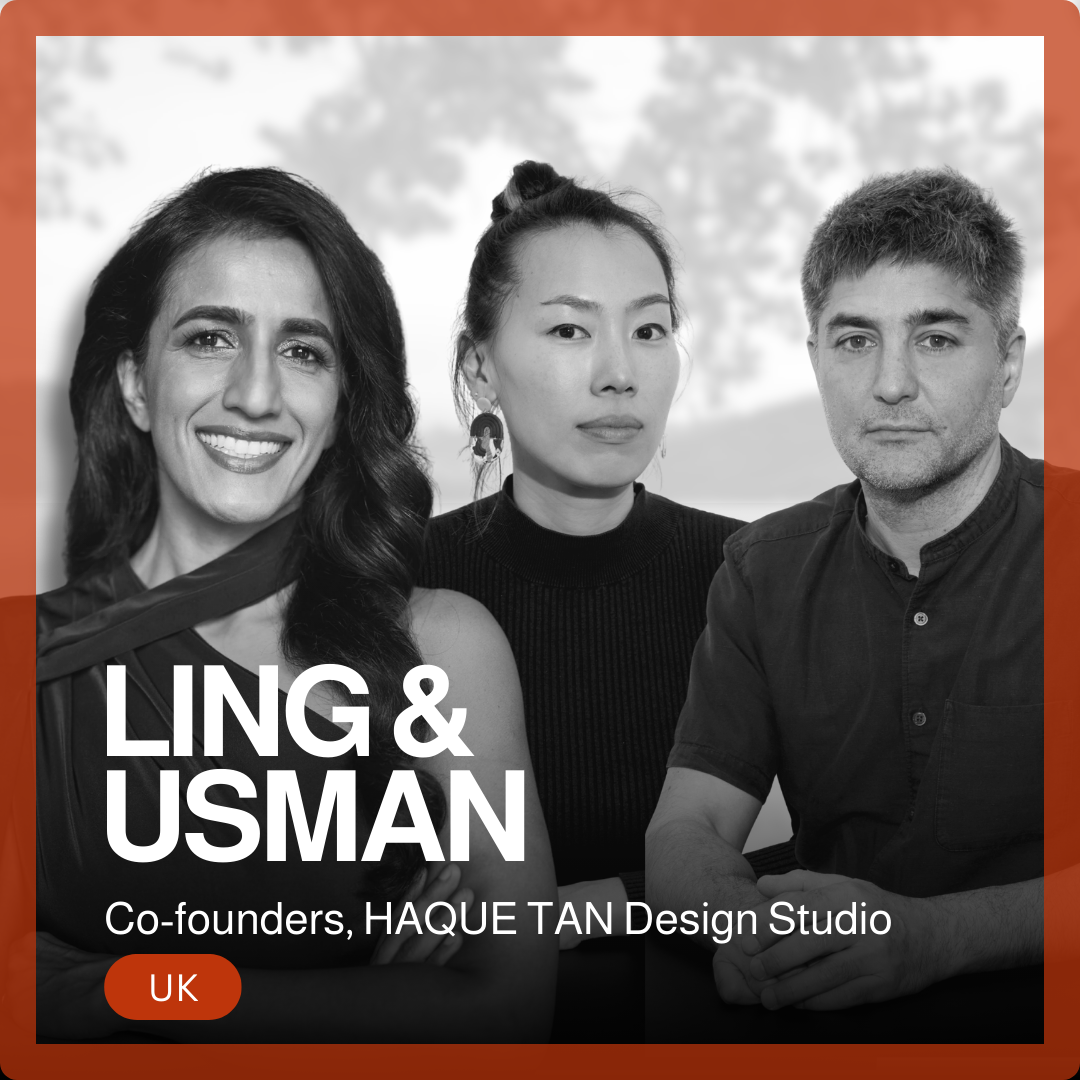
Our Guest- Ling Tan & Usman Haque
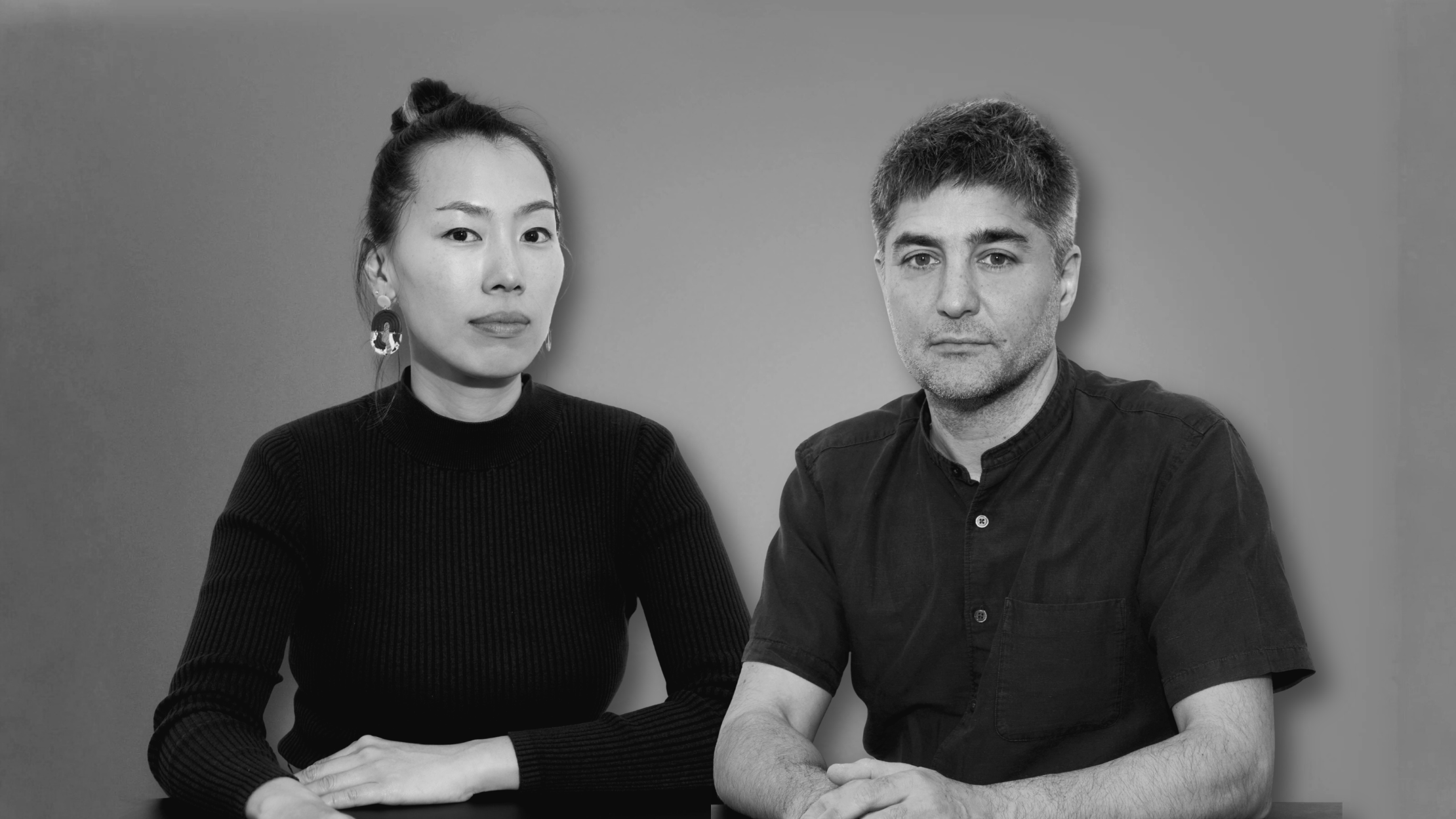
Ling Tan and Usman Haque are award-winning architects and creative technologists who co-lead the studio HAQUE TAN, combining architecture, art and advanced technology to create democratic, participatory urban spaces.
Usman is widely known for pioneering interactive architecture and large-scale public installations such as Another Life, one of Europe’s largest permanent interactive artworks, while Tan’s work focuses on socially engaged and climate-responsive projects like Low Carbon Chinatown, which empowers communities to shape more sustainable futures.
Together, their projects blend human and artificial intelligence to rethink how people interact with cities and public space.
“Theres no one size fit all product out there - design AI in a way that it works for individual rather than kind of the collective hole.”
-Usman Haque
Episode Transcript
Ayesha Khanna:
Hi, Usman and Ling, welcome to AI Across Borders.
Usman & Ling:
Nice to see you. Thanks for having us.
Ayesha Khanna:
You’ve both trained as architects, but your careers seem to have moved away from that. How do you describe what you do today?
Ling Tan:
I would still think that it's within the realm of architecture - not in the physical sense, but in how people make sense of the city, how they interact with each other in the city.
Usman Haque:
For me as well. Every project I’ve worked on, every company I’ve founded has been about pushing the boundaries of architecture. Technically in Britain neither of us can call ourselves architects because we haven’t done the final legal exam. But the discipline we want to contribute to is architecture. We’re trying to move beyond architecture as static form toward experience - how we make decisions in space and how those spatial decisions affect us physically, socially, emotionally.
Connection to Asia
Ayesha Khanna:
You’re both connected to Asia in different ways. Could you share that?
Ling Tan:
I’m Singaporean. I moved to London 12 years ago. Seeing differences between the West and East informs how I understand social interaction and how it manifests in cities.
Usman Haque:
I’m half Pakistani. I’ve lived in Japan and Malaysia and spent time in Singapore. Now we spend a lot of time in Asia together.
The “Tree or Three” Project
Ayesha Khanna:
Tell us about your project in London - Tree or Three.
Usman Haque:
We were invited to work with residents in Clarence Gardens around a 200-year-old London plane tree. People call it the “story tree.” We discovered there were two other genetically identical trees linked underground. So the “tree” was larger than perception - it included its networks, siblings, social relationships.
A resident asked: If the tree could talk, what would it say about the world? That sparked the project.
We used AI experimentally to create a participatory system where residents generated the data. The installation is permanent. Residents can talk to the tree - it responds using a synthesized voice built from residents’ voices. It constantly morphs.
The system runs locally. It is not connected to the internet. It’s a closed network built from community data.
We wanted to build small AI rather than defaulting to big tech platforms. You can build small models. You can run LLMs locally. That sense of control changes everything.
Ling Tan:
It’s not about anthropomorphizing the tree. It’s about creating a mirror. When you speak to it, you see your own relationship to nature reflected back.
We also exposed the hidden systems behind AI - mining, tech companies, datasets - to show that AI is not neutral.
Digital Colonialism & AI Language
Ayesha Khanna:
There’s a conversation about digital colonialism - we’re all using large language models built in specific countries and beginning to sound like them.
Usman Haque:
Why do we let it happen that way? Technology is a sociopolitical artifact. We can rescript it. We can reimagine it.
Ling Tan:
That’s why we work in art contexts. Art allows experimentation. People suspend disbelief. Architecture often lacks that imaginative space.
The Children’s Hospital Project
Ayesha Khanna:
You used generative AI in a children’s hospital project. Tell us about that.
Ling Tan:
The hospital entrance was closed for renovation. They needed a new entrance involving children, but COVID restrictions meant children couldn’t gather physically.
We worked with hospital teachers and children aged 3 to 16. We used generative AI collaboratively. Children wrote prompts imagining plants and flowers - sushi flowers, popcorn flowers, Demogorgon plants. We iterated prompts collectively to create a shared “flower bed.”
The result became a physical installation that bursts from the lobby to the facade and into the street. Media screens respond to real-time weather data.
Usman Haque:
We were exploring gen AI as a visual representation of collective imagination. We also blurred boundaries: real plants, rendered plants, fake plants, mirrors. We wanted people to question what is real.
Community Reactions
Ayesha Khanna:
What was the reaction?
Ling Tan:
We were told it was the first installation with no complaints. Because the children were part of every step, it felt owned by them.
Usman Haque:
When people are taken on the journey, they become invested. That reduces resistance.
Why Corporate AI Adoption Fails
Ayesha Khanna:
Companies deploy AI, but employees don’t use it. Why?
Usman Haque:
Just because you give someone a word processor doesn’t make them an author. Platforms are opaque. Decisions are made by executives for shareholders. People don’t know what they’re contributing to.
When you run your own local model, the sense of power is different.
Ling Tan:
Tech assumes one size fits all - one AI for the average user. But nobody is average. Resistance is a signal.
What Should Young Architects Learn?
Usman Haque:
The most important skill is building something real. When you move from imagination to the world, you encounter unpredictability. Embrace that.
Ling Tan:
Students must learn to search for answers rather than ask AI for answers. The search builds understanding.
Low Carbon Chinatown
Ling Tan:
Low Carbon Chinatown started from my experience as an immigrant. How do minority communities understand climate change? We used food to examine carbon footprints - from farming to transportation.
We developed low-carbon banquets. Participants embody climate actions - from switching to LED lights to non-violence. Conversations became heated, but that’s important. It shows agency.
Scalability & Governance
Ayesha Khanna:
Can this scale?
Usman Haque:
It’s not about using data. It’s about making data - deciding what to measure and how. The question is centralized versus distributed power.
In air quality projects, small chat groups had twice the impact per pound spent compared to top-down data delivery.
Ling Tan:
Scalability often means profit. Hyperlocal change can be more meaningful.
Usman Haque:
We aim to collaborate without consensus. Not everyone must agree - but everyone can contribute.
Closing
Ayesha Khanna:
This has been a fascinating conversation. Thank you for joining me.
Usman & Ling:
Thank you so much. We really enjoyed it.