Banking in the Age of AI
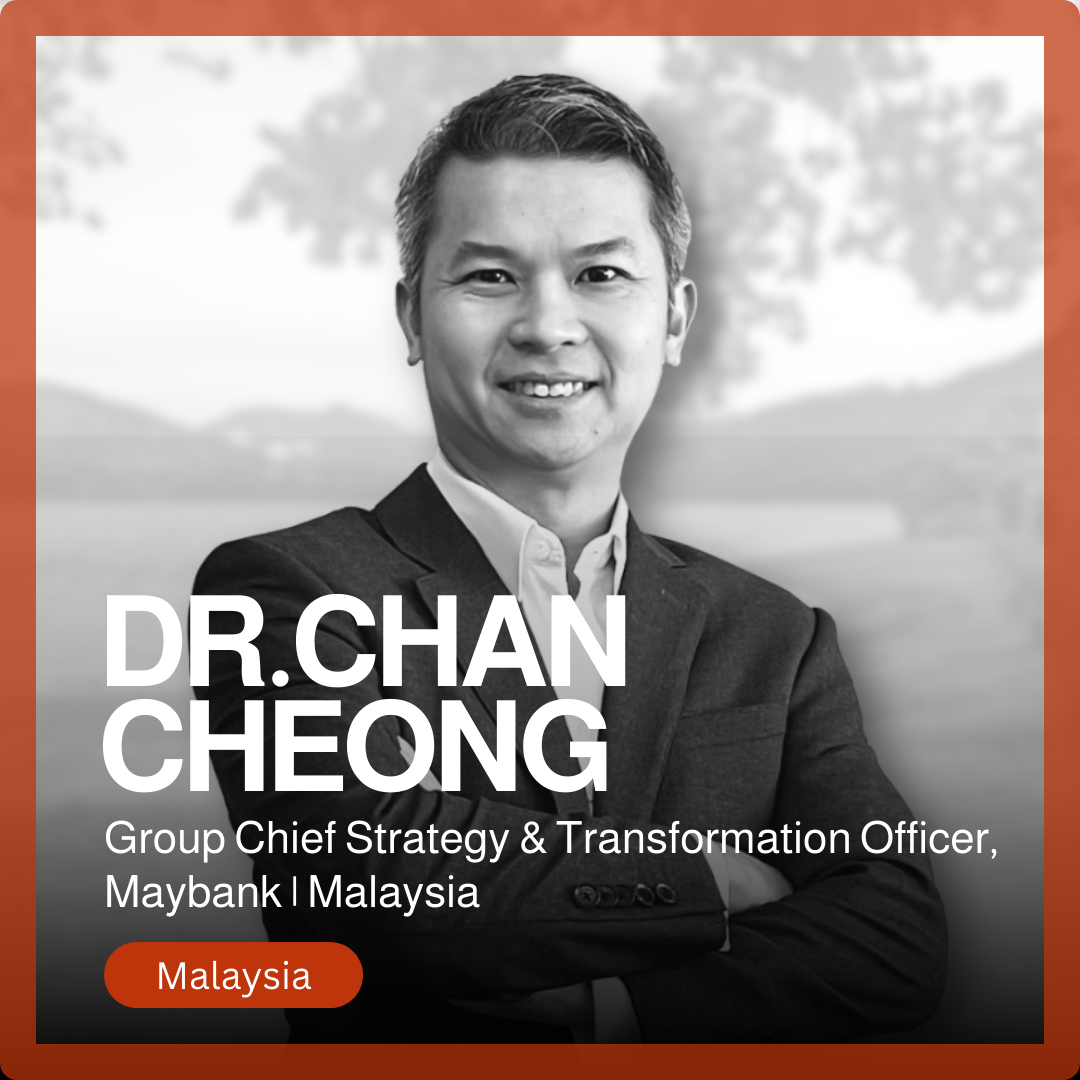
Our Guest- Dr. Chan Cheong
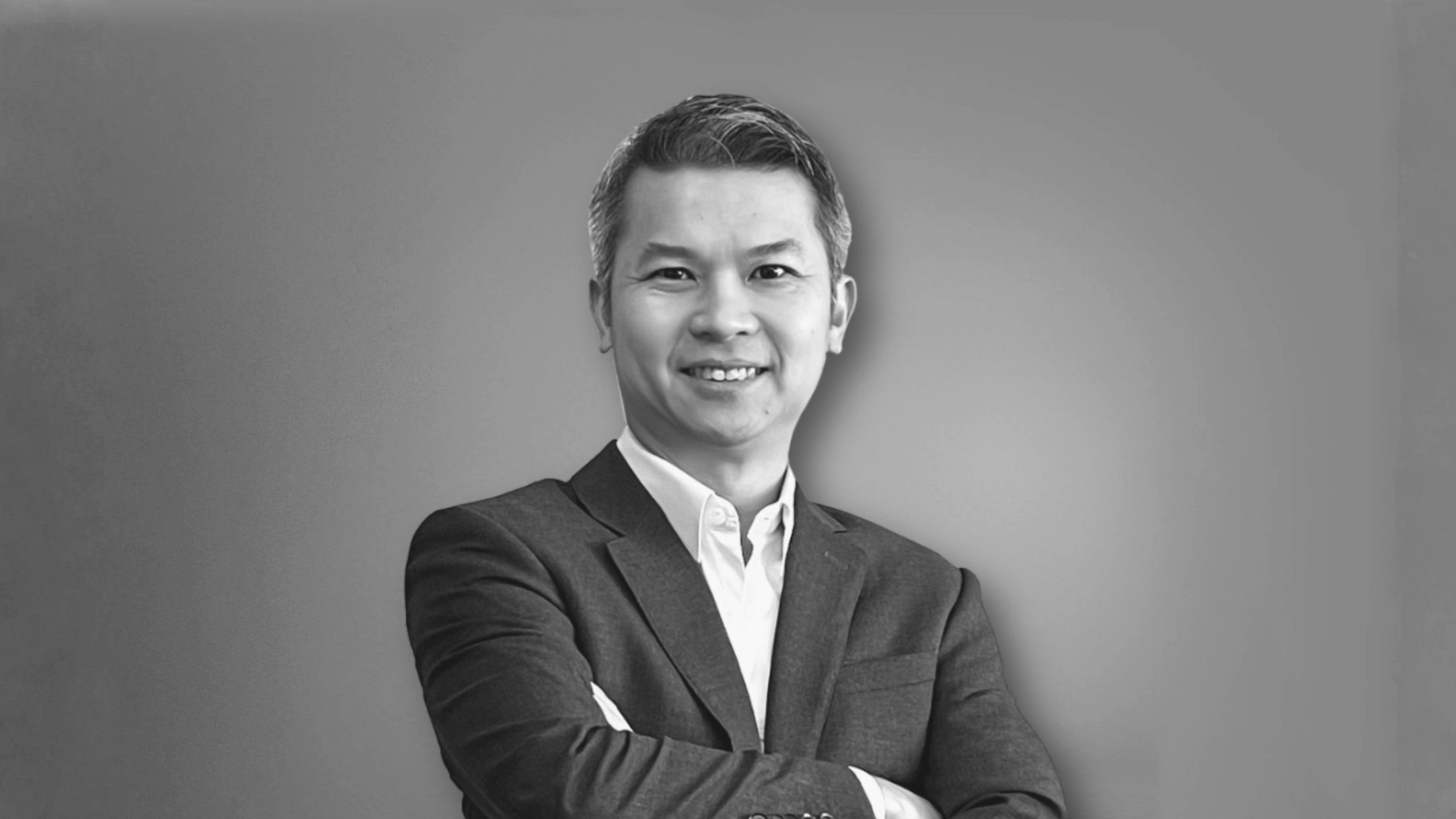
Dr. Siew Chan Cheong is a strategy and transformation leader with over 22 years of experience driving large-scale change across banking, insurance, and industrial sectors in the UK and Asia. He holds a PhD and First Class Honors degree in Mechanical Engineering from University of Southampton, and an MBA from London Business School.
A Chartered Engineer and Corporate Member of the Institution of Mechanical Engineers, Dr. Siew joined Maybank Group as the Group Chief Strategy & Transformation Officer in August 2022, mainly responsible for developing and driving the Group’s strategic growth priorities and transformation across the Maybank Group.
“Don’t chase 100 AI use cases-focus on the few that truly move the organization.”
- Dr. Chan Cheong
Episode Transcript
Ayesha: Hi, Dr. Sue. Welcome to AI Across Borders. It’s great to have you in Singapore.
Dr. Sue: Hi, Ayesha. Thanks for having me. Nice to meet you again.
Ayesha: It’s great to meet you after we sat on a panel together at the Fortune AI Conference. You’ve been leading the transformation of Malaysia’s largest bank, which is a 60-year-old institution. For our audience that may not know a lot about Maybank, could you tell us a little bit about the organization and your role in it?
Dr. Sue: Sure. Maybank started in Malaysia more than 60 years ago, and today we have a presence in more than 15 countries globally. We are present across Southeast Asia, as well as in China, the UK, India, the US, and more.
Altogether, our asset size is more than 1 trillion ringgit. To put that into perspective, that is more than 65% of Malaysia’s GDP. Of course, our business is not just in Malaysia, since we operate in other markets as well. We also have about 44,000 employees. So while Maybank may sound like a Malaysian bank, it really has a significant global footprint now.
As for my role, I joined the bank about three and a half years ago. My focus has been on how to make Maybank a better place for our customers, our employees, and our shareholders, while also supporting society and the economy. That means not only thinking about growing the business and profits, but also how we build the next Maybank for the long term. We want Maybank to still be here 60 years from now.
So we focus on long-term strategy, on building a culture of high performance, on attracting the best talent, and on delivering the best for our customers. It is about business, but also about impacting our people, our customers, and society.
Ayesha: And you made a big announcement a few weeks ago.
Dr. Sue: Yes, we launched our next five-year strategy called ROAR 30. It is about how we accelerate our growth, tap into the opportunities available in the region, and leverage our strengths to capture those opportunities. So yes, the announcement was important, but now it is time for us to execute.
Ayesha: Dr. Sue, what kind of person needs to be in your role? What qualities do you think are important for somebody leading the transformation of such a large regional bank?
Dr. Sue: Obviously the role requires many different characteristics and skill sets, but I think the most important thing is how you make people feel like this is their plan.
Rather than thinking about how I can develop a plan or a transformation program, I think it is very important to bring people along - the Maybankers, my peers in the management team, alignment with the Group CEO, alignment with the board - so that everyone feels this is their vision. If everybody thinks this is their plan, then we have a very good start. To me, that is probably the most important thing.
Ayesha: Given the anxiety that people feel now about change, which is happening everywhere, how do you make 44,000 colleagues feel that way?
Dr. Sue: As I mentioned, we want them to feel this is their plan. The objective of change is not to change for the sake of changing. We share with everyone involved - from the management team to the mid-level leaders - what we want the next Maybank to look like, what opportunities are in front of us, and how we can differentiate ourselves.
The change is for the better. It is about building the right foundation, not only for the next five years, but for something our children can be proud of - that their parents or grandparents worked for Maybank.
What we did was go through a long process. We announced it two weeks ago, but the journey started more than a year ago. We looked at the landscape and the opportunities in front of us. We also did soul-searching on our strengths and weaknesses.
For example, Maybank is one of the largest Islamic finance institutions in the world. Islamic finance is growing faster than conventional banking, and Maybank is probably the largest universal banking player in Islamic finance outside the Middle East. The other top financial institutions in Islamic banking are in the Middle East, and Maybank is the only major one outside that region.
So that is one of our strengths. We also looked at population growth, rising wealth in ASEAN and Asia-Pacific, and increasing trade flows across countries. How can we capture those flows? Our strength is that we are present in many countries and have loyal customers across those markets. How can we help them grow? How can we help SMEs in those markets grow? How can we help the middle class improve their wealth and lives?
These are the things we thought about - helping customers, impacting society and economies - and then we worked backwards to shape the plan. Everybody could then feel excited because they were not here just to make money. They were here to uplift people’s lives, contribute to the economy, and build a new Maybank we can all be proud of. That was the journey we went through over more than a year, and it required alignment with many stakeholders.
Ayesha: Double-clicking on the fact that it is one of the largest Islamic banks outside the Middle East, what are the principles of Islamic banking that make it different from a non-Islamic bank?
Dr. Sue: I’m no Islamic scholar, but let me share my layman’s understanding. There are a few key distinctions between Islamic finance and conventional finance.
For example, Islamic finance is anchored on value-based propositions. In traditional banking, we often think about how to transfer risk from the bank to the customer. In Islamic finance, one of the interesting characteristics is risk sharing.
Islamic finance also prohibits charging interest on interest, because there is no real transaction, no services, and no goods being moved to generate that margin. So it is very clear that in Islamic banking, in order to make money, you need to have a real economy behind it. That is what we call an asset-based economy.
Islamic banking also emphasizes helping those who require it. For example, if somebody is late in payment because of unforeseen circumstances, conventional banking may charge them a late payment fee, and then interest could be charged on top of that. Islamic banking does not allow that. If somebody needs help, we need to find ways to support them.
Those are some of the characteristics of the value-based model that differentiate Islamic banking from conventional banking. If you take a step back, many of these principles align with what the world is now talking about in sustainability and ESG. There is a lot of overlap between ESG and Islamic banking, and we think Maybank could be one of the key players in driving the growth of Islamic finance.
Ayesha: When you step back from this goal and then think about culture, how important is the use of AI in achieving these end goals, whether it is helping employees or helping customers?
Dr. Sue: The way I look at AI is that it is an integral part of supporting our business model and vision, rather than a separate AI transformation or AI strategy.
In ROAR 30, we think about how to grow targeted businesses, how to grow in specific markets, and how to serve customers better. AI comes in as an enabler for delivering that promise.
For example, I talked about values and helping customers, but today a lot of salespeople spend a lot of time on processes. Their work becomes very transactional, process-driven, and compliance-driven, and that takes up a lot of time. But if you really want to be more human, then you need time to be human. You need time to build empathy with customers.
So where AI can help is by reducing that burden. For example, we built a tool for SME relationship managers. Within five minutes, it can create an 80-page deck for the RM, outlining the SME, the market, and what solutions or products that SME might require. The RM can then think about building the relationship when meeting the customer, rather than spending time gathering basic facts.
That is how we think about integrating AI - as a tool to support the way we serve customers, so that we can be more human rather than just talking about terms, conditions, and processes. It is important for us to make banking more humanized.
Ayesha: In this future world of banking, what characteristics does a relationship manager need to have so they can be empathetic but also work with AI?
Dr. Sue: We need both. A lot of information will be readily available through tools. What matters is how, based on that information, we conduct the conversation, build the relationship, and try to understand things that may not be publicly available.
So relationship-building is critical. As for using the tools, AI is becoming very user-friendly. Very soon, people will be using AI tools every day on their phones. Everyone already has access to AI through chatbots, image generation, and other tools.
So I think the tool usage will become easier. What matters more is empathy - how to understand more about the customer beyond the information you already have.
Ayesha: That’s really interesting. What you’re saying is that AI will become easier to use, and then the real purpose of the role is to serve the customer empathetically. Would you need additional training for this? How do you bring that out in people once they have more time?
Dr. Sue: One interesting thing about Maybank is that more than 15 years ago, we announced a mission of humanizing financial services. That has been part of Maybank since at least 2010. When I first started at Maybank, I could feel it. When I walked into the office, I could feel the energy of the workforce and the passion of Maybankers for the company.
What has held us back is a lot of paperwork and processes that stop us from bringing more of that humanizing spirit to life. So what we have been doing is helping our frontliners as much and as quickly as we can by reducing those processes, paperwork, and bureaucracy.
When we first started, all the EXCO members went down to the ground, visited branches, and asked people directly what problems they were facing. Many of them said things like: “I have to go through too many systems to find information,” or “I have to manually enter data instead of having it auto-populate.”
A lot of those operational pain points are what we are fixing. The people at Maybank already want to go out, talk to customers, and serve them. That is something quite unique about the organization.
Ayesha: I remember I went five or six years ago when the head of HR had invited me to give a talk on women and tech, and I was very impressed by the energy and enthusiasm of hundreds of people at Maybank, largely women, who came to attend.
Speaking of AI and digital again, one of the issues coming up is that AI is producing a lot of content, but people now talk about “AI slop” - average output, or everyone having the same information. So what would make the information in the hands of a relationship manager at Maybank different if another bank is using the same AI model?
Dr. Sue: That is interesting. The tool may be similar - for example, many organizations use Microsoft tools - but the data will not be the same.
One of Maybank’s core capabilities is the huge amount of data we have about our customers. Malaysia has about 13 million people, and we have more than 15 million customers in Malaysia. Many of them have banked with us for a long time, so we have deep customer data. We can use that data to train our models and provide personalized or hyper-personalized offerings.
We can use data to understand more about our customers - what they like, what their hobbies are, how we should communicate with them, whether they prefer a formal tone, a casual tone, or something in between, and what languages they prefer.
So I think data is what really differentiates us. It allows us to train the tools so that our people have access to something truly hyper-personalized in terms of product and service recommendations.
The next thing is selecting the right people. Over time, we may not need as many people doing pure operational or transactional work. Instead, we will need people who are more comfortable with communication, relationship-building, and empathy.
We are trying to upskill our people as much as possible, using the right data to train the tools. Even if the technology becomes a commodity, different organizations will still have their own strengths that make their use of it unique.
Ayesha: What do you think about young people who are afraid that junior-level jobs are being taken over by AI? Is that true in your organization or in your view?
Dr. Sue: It’s possible. Some operational and transactional tasks may not require as many people. But I think this applies to both junior and senior roles - it is more about the nature of the work than the level.
At the same time, AI will create new types of roles. It will increase demand for more creative roles, more technological roles, and roles that involve testing new ideas with customers. So the demand for junior talent will still be there, but I would say it will shift from operational work to something more creative, more empathetic, and more advanced.
That said, what we call an advanced skill set today may not feel advanced anymore in three years.
Ayesha: Do you think educational institutions are ready to produce these new types of graduates?
Dr. Sue: Interesting question. I haven’t closely followed how universities are operating because my children are still very young - my eldest is about 10 or 11.
What I can share is based on direct experience in primary education. Surprisingly, kids are getting exposure to technology at a very early stage. They are far more advanced compared to when we were in school 30 or 40 years ago.
They are not only learning mathematics, but also how to apply mathematics. Teaching is becoming more scenario-based and project-based. They are also exposed to tablets from an early stage.
So from what I can see, at the primary level a lot of institutions are already adapting. As for universities, I’m not an expert, but I can definitely see in Malaysia that this is the direction the government is heading.
Ayesha: It’s very much the case in Singapore too - moving away from an emphasis only on grades and more toward problem-solving.
Dr. Sue: Yes. I remember a conversation where someone said that during our time, we were taught that five plus five equals ten. Now it’s more about: how do you make ten? It can be one plus nine, or many other combinations. That is a big shift in approach, and it is the right direction. Rather than being trained to memorize the answer, we should learn to find different ways to get there.
Ayesha: Speaking of banking and operations, I was just reading that Goldman Sachs is working with Anthropic and will have AI agents in compliance and accounting. What is your view on using AI agents?
Dr. Sue: I think it is definitely something many organizations will move toward. To be honest, developing a proof of concept using AI agents is actually not that complicated. In fact, we went through a phase where there were too many POCs.
Quite often my team would tell me, “I had an idea, I built something over the weekend,” and then they would demo it. That’s great. But the challenge is productionizing it, scaling it, getting people to adopt it, and delivering targeted impact. That is not easy, because there is a lot of legacy infrastructure involved - whether technology, data accessibility, and so on.
But technology can also help solve those problems.
Previously, many financial institutions were very cautious about cloud-based technology. Because of that, they had limited access to the latest technologies needed to solve legacy issues. At Maybank, we have moved toward embracing cloud-based technology. We understand the risks and find ways to mitigate them, but once you have access to cloud-based technology, a lot more opportunities open up.
For example, many organizations have fragmented data, but now there are tools that help stitch data together. Previously we may not have had those options, but today they are available. That will accelerate adoption of AI and agents for compliance, operations, and finance-related roles.
If you think about it, AI agents are not entirely new. Previously we had RPA. AI agents are really a more intelligent form of RPA. They open up more possibilities. So yes, that is definitely something we are exploring internally as well.
Ayesha: At the panel, you made a great point that operationalization is the real key to success. In Davos, so many CEOs said, “We have lots of POCs and very little ROI.” How do you make sure a pilot actually goes to scale?
Dr. Sue: As I mentioned, we went through a phase of having too many POCs until we said, “Hold on a second. Let’s stop doing so many POCs. We need something we can productionize.”
About 12 months ago, we made a hard decision: let’s focus on three to four areas that we really want to prioritize.
For example, one area could be how we develop use cases to support relationship managers, especially wealth RMs, so they can be more productive and spend more time serving customers instead of doing operational work. Another area could be risk and compliance, since there is a lot of operational work there and AI can help improve productivity, efficiency, and effectiveness.
Those are only two or three areas, but within them there can still be different use cases. Some will have direct ROI, and some only indirect ROI.
For example, if I develop a model that helps an RM understand the customer better and what products they may be interested in, that gives intelligence — but I cannot directly link that to a specific number of dollars, because the RM still has to talk to the customer and close the sale. That is an indirect revenue impact.
On the other hand, if we deploy a chatbot that allows customers to find answers without calling the RM or the call center, then we can directly measure how many calls were reduced. That is a more direct impact.
So we have to be very careful. Otherwise we fall into the trap of demanding direct ROI for every use case, when actually the impact is often collective. We cannot evaluate everything only use case by use case.
Ayesha: That runs counter to the pressure many organizations feel. A lot of people do not have the bold political will to choose just three or four things. What does it take for the EXCO to come together and say these are the priorities?
Dr. Sue: It is definitely not easy. Many people are excited about AI. Finance wants something, HR wants something, retail banking wants something, corporate banking wants something. But we have limited resources.
We realized that if we spread ourselves too thin across many POCs and use cases, we would not get the outcomes we want. So we collectively made a hard decision to say: this is a learning phase. Rather than spreading ourselves across 100 use cases, let’s focus on two or three things and make trade-offs.
Once we are comfortable that those few areas can generate the right outcomes - whether direct or indirect - then we can replicate later. We are not saying we will never do other use cases. But we have to start somewhere.
We are still on that journey. I would not say we have done it perfectly yet. But we have made the call to focus, make trade-offs, and agree that not everything has to show direct ROI individually. On aggregate, there should be measurable impact.
Ayesha: One of the things you did was give Copilot to thousands of people. Did it work?
Dr. Sue: When we first announced our partnership with Microsoft, many people immediately asked, “When am I going to get it?”
Of course, we needed time to build the foundation and roll it out. We are still in that process, and hopefully by the end of this year we will have more than 30,000 people able to access the latest tools.
I would say the tools are very easy to use, but there are still some things we need to help our people get used to. I’m talking about Microsoft 365 more broadly, not only Copilot.
For example, we are used to emailing drafts back and forth. But now people can edit documents together in real time. You do not need to send the latest version around by email. These are the kinds of new habits we need to encourage. We also need to show people that all communication can stay in the same chat thread, and that Copilot can help summarize previous decisions without people digging through old emails.
So yes, there is still some education required. But the good news is that the tools are easy to use. I see more excitement than concern in adopting them.
Ayesha: I think that is key. I have met a lot of companies where the tools are provided, but nobody uses them, and management gets frustrated. But it seems that is not the case here.
Dr. Sue: Yes. Many Maybankers have been asking, “When am I going to get it?” And it is not only the younger employees.
Usually you would expect younger employees to be more comfortable with these tools. But we also have people who have been working at the bank for a long time, and they know how tedious some tasks used to be. Then they see someone younger doing something much faster and become very interested in learning how it can be done.
So we are slowly building that excitement. The excitement is already there - we just need to speed up the rollout to match it.
Ayesha: I have noticed that in some countries there is more fear about AI displacement, while in others - especially younger, growing economies - there is more excitement. Do you think in Malaysia there is more optimism than pessimism about AI and digital?
Dr. Sue: Overall, what I have sensed is that there is more excitement.
Of course, whenever new technology is introduced, some people worry that they will lose their jobs or that certain roles will become obsolete. But this is a cycle we have seen before with many rounds of technological change.
From attending conferences and reading papers, I think the positive sentiment outweighs the negative. There are still concerns about whether AI gives the right answers and how to manage risks and compliance, but generally the mood is that this is something that can help us grow.
Part of that is probably because Malaysia is still a growing economy, and ASEAN is one of the fastest-growing regions in the world. That may be why sentiment is more positive than negative.
Ayesha: I’ve seen that too. In some parts of Europe, people are very anxious. Then I come to Malaysia or Indonesia and find hundreds of people so excited. I think it is because they see growth opportunities and social mobility.
Dr. Sue: Exactly. A lot of people see this as an opportunity to improve their earnings. Previously it was more difficult for them to access new technology, but today many AI tools are free. So it is not just about the tool itself - it is about helping people progress.
Ayesha: Now I’m going to switch from Maybankers to customers. Do we even need a bank in the future?
Dr. Sue: I heard this question eight or nine years ago, and banks are still here.
Personally, I think we will still need banks, though perhaps not in the same format or with the same experience. Banks are not something you can automate completely. There are many digital banks, but you also find that some of them envy traditional banks for having a physical footprint, depending on the market.
For retail banking, I think the need for in-person interaction will continue to decline, except for more complex products or situations where you want to build a relationship. But for corporate banking, I think human interaction will still be important.
Operationally, we will still need banks for different segments and for the economy. There has to be some organization called a bank to facilitate the flow of capital. A bank is not just a company - it plays a role in funding companies and supporting the economy.
So personally, I think banks will still exist, but they may take a different shape or form.
Ayesha: Most people only think of their own experience as consumers, but banks do so much more - trade finance, cross-border payments, and so on.
If you imagine somebody in Kuala Lumpur interacting with Maybank a year or five years from now, where will that happen? In an app? In a chatbot? Embedded elsewhere? How do you see that customer interaction happening?
Dr. Sue: I think some of this will happen sooner than we expect.
Imagine you go to buy a cup of coffee. Today, you walk in, order a hot latte, get your drink, and make a payment. But in the near future - maybe two or three years from now - you may walk into a café chain you have visited before, and it will say, “Hey, Ayesha, would you like your hot latte again?”
You may not even have to say anything. It will know what you want and know your name. You could take the coffee and walk out without explicitly making the payment, because a wearable device or facial recognition system identifies you and deducts the payment from your bank account.
So the experience will be very different. The bank is still there, and the payment transaction is still happening, but the service becomes much more personalized. You feel happier walking in because someone knows what you want before you ask and knows your name.
Ayesha: I would love that. I love my coffee in the morning, and I do miss the barista in Joo Chiat who knew me.
But I have also been to conferences where people are wearing those devices, and it can feel creepy. So how do you draw the line between personalized and creepy?
Dr. Sue: I think everything depends on consent. We collect data from customers, but obviously this has to be based on consent, and that consent determines what we can use the data for. We have to protect the data, and we have to stay within what the customer has agreed to.
Many customers decide they do not want to share their data, or that once we have it, we cannot use it for analytics, upselling, or marketing. Banks have to adhere strictly to those guardrails, frameworks, and permissions.
So when I talk about personalization, I am referring to customers who are comfortable receiving that service. There are many customers who are okay with that kind of experience, and that is where we offer it.
The broader concern, though, is often not the bank but other organizations. People download free apps all the time and put in their personal data, and we do not know what happens after that. So these are the things we need to remind people to be careful about when managing their data.
Ayesha: I was just reading that the European Union is looking at whether TikTok’s addictive design may actually be illegal because of the mental harm it could cause. Does user experience and the values behind it come up in how you think about the future bank?
Dr. Sue: We are highly regulated, so often it is about how we navigate within a very tight regulatory framework. At this stage, if we adhere to that framework, that is less of a worry.
But the bigger concern is what happens beyond that - many fraud cases happen because customers accidentally click on links, visit certain websites, or download apps that compromise the security of their device. That is the kind of issue we need to be very careful about.
It is not just the role of a bank to make sure this does not happen, because much of it is beyond the bank’s control. We need an ecosystem approach.
For example, could telcos detect these risks earlier? How should free apps be regulated in terms of what they are allowed to ask for? Before an app is uploaded somewhere, is there enough scrutiny of its security?
These are issues that go beyond banks. The ecosystem to deal with them is still developing, and there is still a lot of work to do.
Ayesha: One thing that is interesting is that the weakest link in an organization is sometimes not the AI, it is the human. With deepfakes, phishing, and identity theft, how do you make sure your employees are not vulnerable and exposing the bank and customer data?
Dr. Sue: We run regular simulations. We do phishing exercises internally and send phishing emails to see how many people click them. These are things we regularly remind our people about.
Inside our security systems, we also have firewalls and the necessary protections, so that even if a phishing email is clicked, we can detect it early. So the human side and the technology side have to go hand in hand.
When an employee clicks more than twice across different exercises, we have a conversation with them. We do this at all levels - whether you are the CEO, a board member, or anyone else - because everybody has to go through that exercise to protect the bank and its information.
Ayesha: When you think about where banking is going, and you look at your kids and other young people, what should they be studying now? If my kids wanted a job at Maybank ten years from now, what would you look for in an employee?
Dr. Sue: I think the basics are still required. Both hard skills and soft skills matter.
Even though AI can do the maths for you, I would still expect someone to be able to do basic maths rather than relying completely on a tool. It is like using satnav - I would still expect someone to know how to drive home without it, because if we rely on it too much, people may forget how to navigate entirely.
So the basics still matter — maths, languages, finance, and so on.
But what is becoming more and more important is whether someone can make decisions, lead, communicate, and show empathy. Those are the things that AI and tools cannot yet fully replicate, because they are fundamentally human.
I think how we interact with people, whether someone can be a leader, whether they can mobilize a team, whether they can face setbacks and recover from them — those are the things I would be looking for.
And I hope my children will be ready for that kind of world, because it will become very competitive. Everybody will have access to similar tools. The data may differ, and the sophistication of tools may vary, but overall it will be a much more competitive environment, and we need to prepare our children for that.
Ayesha: I agree. I think it will become much more competitive. I feel like I need to level up, even at my age and stage in my career. It is pushing all of us beyond our comfort zone.
Dr. Sue: Yes. It is challenging, but also exciting.
Ayesha: One of the reasons I feel so enthused is because the government in Singapore has so many initiatives, and you were just telling me earlier there is now a Chief AI Officer in Malaysia. Can you tell us a little bit about regulation and the general government support you are seeing there?
Dr. Sue: Definitely, there has been a lot of positive development and progress in this space.
In Malaysia, we have a Digital Minister. We have the National Office of AI. The regulator has sandbox frameworks. We have the digital banking framework. There is now an exposure draft on digital assets. There is active thinking around how AI should be regulated.
So I think the general trend is very supportive, because we all understand that if we do not move in this direction, we will fall behind. It is not really a choice about whether we should do it. AI is already here. So instead of trying to stop it, it is more about how to make sure it is applied in the right direction.
We are also seeing the rise of what people call “new economies” in Malaysia, and that is something Maybank is prioritizing as part of ROAR 30. These include areas more relevant to technology, the digital economy, infrastructure like data centers, and environmental sectors.
So you can see that it is not just about regulation. From a policy and economic perspective, there is strong support for driving economic growth through technology-enabled transformation.
That is exciting not only for banking, but for many industries. Southeast Asia is definitely one of the fastest-growing economic blocs in the world, and we are lucky to be here and to see more interesting developments coming soon.
Ayesha: I feel very lucky to be in Southeast Asia.
But then alongside all this excitement, there is also fear. In Silicon Valley, there are billionaires preparing for the apocalypse, building underground bunkers, or planning to go to Mars. Is there an AI apocalypse coming? Is it a bubble?
Dr. Sue: There is certainly a lot of discussion. Clearly, there are some valuations that may not be justified. But if you look at the fundamentals, the demand is there. We need AI to improve productivity. We need AI to help us do more than we can today — whether in exploration, learning, or serving customers.
That is why data centers are being built and why we need more energy. The demand is real. The fundamentals are real.
It may be that some companies are valued too highly, but on aggregate, I think this is a trend that is moving on a positive trajectory. We just have to be careful about specific companies, rather than worrying about the entire development.
Maybe I am too optimistic, but personally I am quite excited to see where this goes, because we can benefit from that development.
Ayesha: What about the people who say an AI disaster will happen — that AI will take over, humans will end up in zoos, or we will have to run away to Mars? What do you think is the biggest risk AI poses to the economy or society?
Dr. Sue: Whether AI will take over humanity is both a philosophical question and a practical one.
It is possible, but what we need is for machines to check machines. I think we have to accept that humans alone may not be able to check machines anymore. We need humans to develop machines that can check other machines.
If that kind of check and balance can be put in place, then I think we can mitigate the risk. The real risk is if we reach a stage where humans no longer understand the machines at all. That is where danger lies.
But I hope we are preparing for that scenario. A lot of people are already building systems designed to counter or monitor other systems. There is a lot of interesting research happening in that area. I think it requires thoughtful organizations and thoughtful leadership to address it.
Ayesha: Dr. Sue, this has been an amazing conversation. Very inspiring. I’m excited by what I see in Maybank and Malaysia. Thank you so much for your time today.
Dr. Sue: Thank you, Ayesha. Nice talking to you. Thank you.
Ayesha: Thank you.