AI in the Dentist’s Chair
Our Guest- Wardah Inam
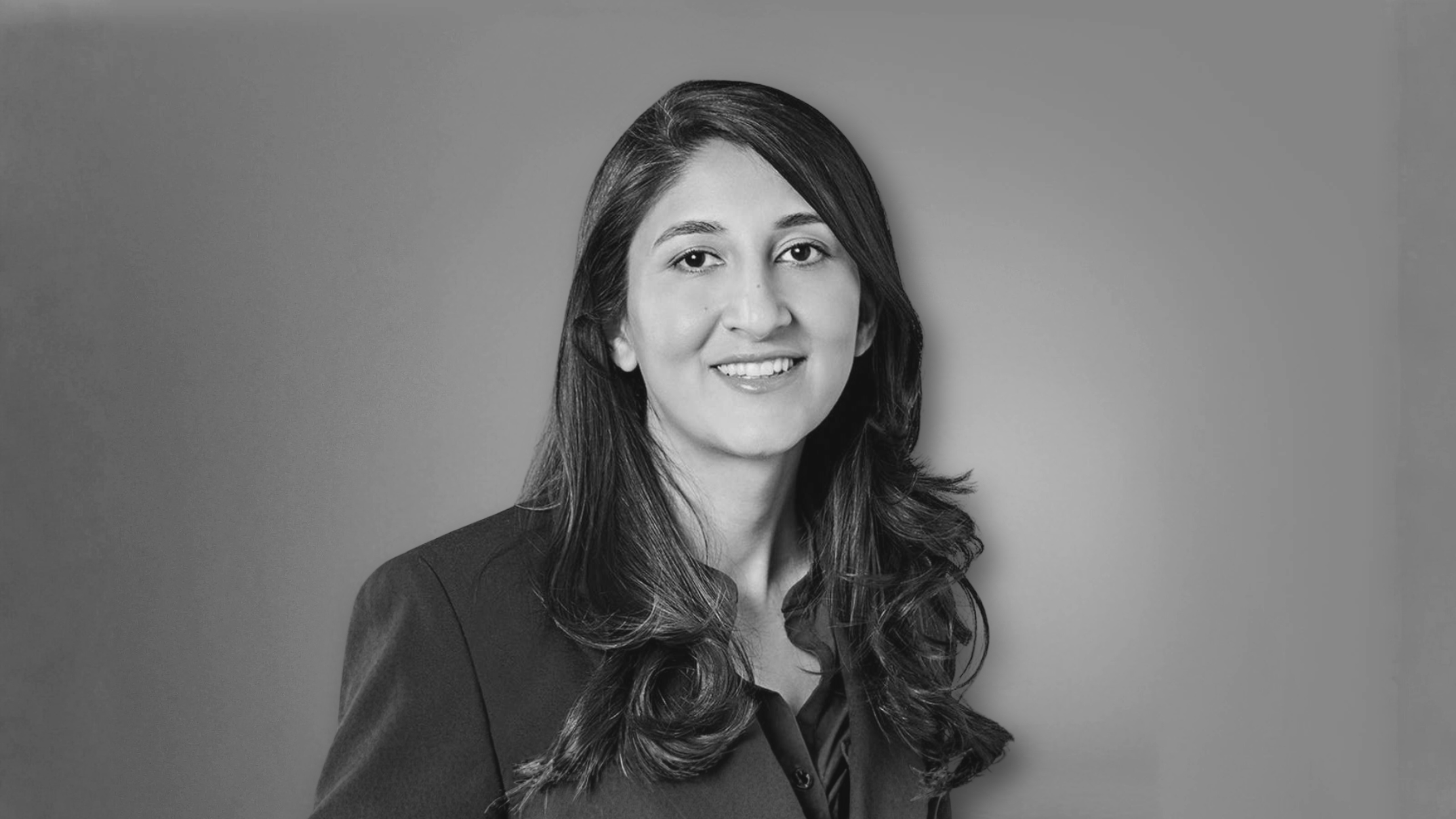
Wardah Inam is the Founder and CEO of Overjet, a leading health AI company transforming dental health and oral health through artificial intelligence, machine learning, and deep learning.
Her company develops FDA-cleared AI tools that analyze dental X-rays, detect tooth decay and gum disease, and improve clinical decision-making in modern dental care. Wardah holds a PhD from MIT, where she worked on autonomous systems before shifting her focus to AI in healthcare.
Today, she is pioneering the use of AI to strengthen oral hygiene, improve diagnostic accuracy, and advance the future of dentistry.
“What AI is doing right now is improving the floor. So as we increase the floor of standard of care, the floor is increasing.”
-Wardah Inam
Episode Transcript
Ayesha Khanna:
Welcome to AI Across Borders. It's such a pleasure to have you here today.
Wardah Inam:
Thank you for having me.
The Personal Story Behind Overjet
Ayesha Khanna:
Now, you’ve said one dentist told you you had zero cavities, and then another dentist told you you had four cavities, and this terrifying misalignment between the two is what started you on your journey to really think about teeth. Tell me about that.
Wardah Inam:
I changed my dentist because I had changed neighborhoods. It was six months apart. One dentist had a more conservative diagnosis. The other was more aggressive. That didn’t seem right to me. It should be a science rather than an art. Can you actually determine what is really happening? That’s how it all started for me.
The Mouth as Gateway to the Body
Ayesha Khanna:
None of us really think about our teeth much. You have called it a gateway to the body. What do you mean by that?
Wardah Inam:
It’s more the mouth, right? Your mouth has not only your teeth, but also saliva. What you eat, your oral microbiome, impacts your health. If you have an infection in your mouth — gum disease is one of the most prevalent chronic conditions — that leads to inflammation across the body. There are correlations with diabetes, cardiovascular conditions, and others. If you’re pregnant, for example, you’re supposed to get cleanings more often to reduce infection.
Ayesha Khanna:
I didn’t realize that. Most people don’t understand the role AI can play.
How Overjet Works
Ayesha Khanna:
Tell me what Overjet does and how it is different from what a dentist is doing today.
Wardah Inam:
Dentists collect a lot of information - about 18 X-rays in a full-mouth set, hundreds of measurements in perio charting. Not all of it may be comprehensively analyzed.
Now with new modalities like 3D scans, you capture even more — oral cavity, nasal cavity, airways. How do you analyze that comprehensively and quantitatively?
For example, periodontal disease is diagnosed by looking at bone loss. Historically, that was eyeballed. With Overjet, you can measure it. You know it’s two millimeters today and 1.5 millimeters before. You can track progression over time.
That longitudinal variation matters. For some people, two millimeters may not be concerning. For others, it is. We help analyze data quantitatively and automate workflows that dentists previously did manually.
Ayesha Khanna:
When I go to the dentist, they use a metal pick and manually write down measurements. How is your experience different?
Wardah Inam:
With Overjet, hygienists can speak measurements, and voice-to-text captures it. Ambient AI listens and records. No one has to manually write it down.
We also have X-ray models and models that read perio charts. We analyze different types of clinical data comprehensively.
Gum Disease and Alzheimer’s Connection
Ayesha Khanna:
What shocked me was gum disease being related to Alzheimer’s. Is that true?
Wardah Inam:
There are many studies pointing toward that link. You can’t know 100% causation in humans, but inflammation is the mechanism. Gum disease is an infection. Your immune system goes into hyperdrive. Chronic inflammation enters the bloodstream and impacts other parts of the body.
Studies, including work from the University of Toronto, have shown links, including in animal models. As the immune system goes into hyperdrive, it can worsen outcomes.
Ayesha Khanna:
I didn’t realize that bleeding gums could quietly increase dementia risk.
Wardah’s Background
Ayesha Khanna:
Did you study medicine?
Wardah Inam:
My background is in technology. I did my PhD at MIT on autonomous systems. My undergraduate degree was in robotics. My PhD was focused on clean energy. I later shifted toward healthcare because I wanted to work on technology that impacts human lives.
Dentistry was attractive because incentives are aligned. Clinicians make decisions. It impacts almost every person. Even small improvements can have a large impact.
Raising Venture Capital
Ayesha Khanna:
You’ve raised the most money in dental AI. What was that process like?
Wardah Inam:
Early on, AI wasn’t popular. Investors questioned margins and compute costs. Healthcare adoption is slower. People questioned whether AI could outperform dentists.
We started at the right time. Deep learning had matured. When we brought products to market, we surpassed dentist-level accuracy and achieved FDA clearance.
I remember when people questioned whether AI could number teeth. Now our models are over 99% accurate.
FDA Clearance
Ayesha Khanna:
What does FDA clearance mean for patients?
Wardah Inam:
We are FDA cleared, not approved. For class two devices, you must prove AI performs at or better than dentists standalone, and that dentists perform better using it. That requires clinical studies with statistical validation.
Diagnostic Accuracy
Ayesha Khanna:
Dentists using Overjet find about 32% more disease. That implies many people may have undiagnosed problems.
Wardah Inam:
Humans can miss things. Fatigue matters. Screen settings matter. Some issues are subtle. Dental disease progresses slowly, but early detection prevents invasive treatments like fillings or root canals.
Bone loss does not reverse. Acting early matters.
Over-Diagnosis Concerns
Ayesha Khanna:
Is there a risk of over-diagnosis with AI?
Wardah Inam:
Longitudinal data matters. You can track whether something progresses over time. Dentists still make final decisions. AI provides measurement.
Overjet vs ChatGPT
Ayesha Khanna:
What’s the difference between using Overjet and uploading X-rays to ChatGPT?
Wardah Inam:
ChatGPT hasn’t been trained on high-quality dental imaging data. Our models are specialized and trained specifically on dental diagnostics.
Pediatric Dentistry
Ayesha Khanna:
Tell me about pediatric dentistry.
Wardah Inam:
Children’s anatomy differs. X-rays look different. Cavities present differently. Our AI helps dentists educate children and parents visually.
User Experience
Ayesha Khanna:
If a dentist wants to use Overjet?
Wardah Inam:
We have multiple products. The core imaging product requires clicking a button to view analysis. There are advanced features for power users.
Training Dental Students
Ayesha Khanna:
Are dental schools teaching AI?
Wardah Inam:
We’re in about 25% of dental schools. We teach what AI can and cannot do, so clinicians remain strong decision-makers.
Visiting a Dentist Without AI
Ayesha Khanna:
Would you go to a dentist without AI?
Wardah Inam:
I would change my dentist if they weren’t using it.
Democratizing Access
Ayesha Khanna:
What about developing countries?
Wardah Inam:
Administrative costs drive expense. We reduce paperwork and automate insurance workflows. In regions with few oral radiologists, AI can expand access. In the future, AI combined with robotics may allow automated diagnostics and treatments.
Insurance Automation
Ayesha Khanna:
Does Overjet help with insurance claims?
Wardah Inam:
Yes. We help objectively review data and reduce processing time from weeks to days or hours.
The Future of Dentistry
Ayesha Khanna:
What does the future look like?
Wardah Inam:
AI will expand across diagnosis, treatment planning, lab materials, and administration. Robotics is emerging. AI raises the floor of care, while humans raise the ceiling.
Oral Health Score
Ayesha Khanna:
Tell me about the oral health score.
Wardah Inam:
We developed and published in Nature Scientific a way to quantify oral health using probability of treatments and restoration cost. Patients can measure their overall oral health.
Will We Still Need Dentists?
Ayesha Khanna:
Will we still need dentists?
Wardah Inam:
Doctors do more than procedures. AI improves baseline standards, but human expertise remains essential.
Closing
Ayesha Khanna:
This conversation made me rethink how I choose a dentist and how I think about oral health.
Thank you so much for your time today.
Wardah Inam:
Thank you.