He Became His Own AI Experiment
Our Guest- Dean Ho
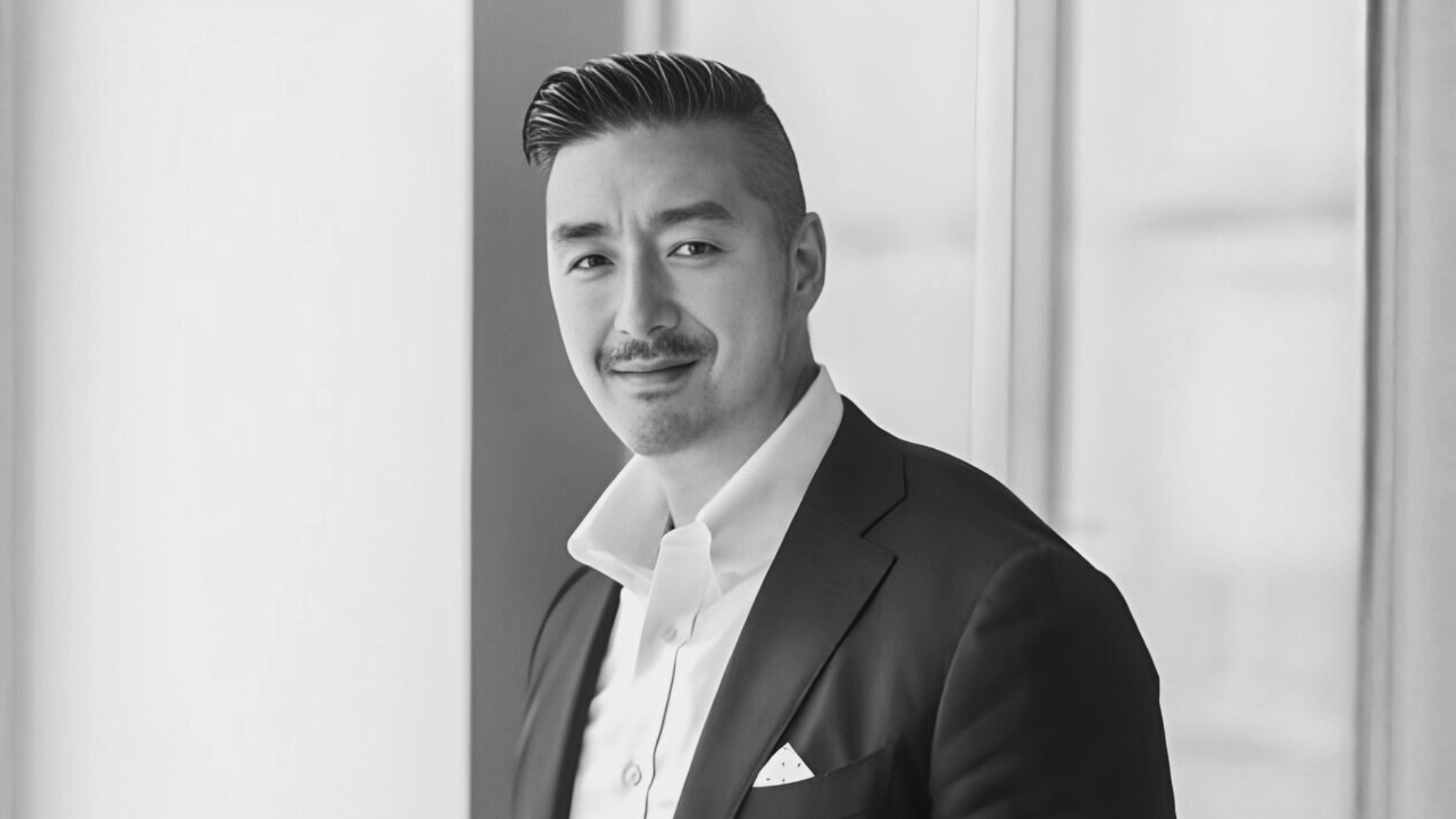
Dean Ho is an academic and biomedical engineer, a Professor and the Head of the Department of Biomedical Engineering at the National University of Singapore (NUS).
He is also the Director of the Institute for Digital Medicine (WisDM) and the N. 1 Institute for Health. His work focuses on using AI and digital health to create personalized medicine, particularly in areas like cancer treatment, where his research has been featured in major news outlets and he has received numerous awards.
“It’s not just finding the right starting dose,” he says. “The question is how does it adjust to me over time?”
- Dean Ho

Most people use wearables to count steps. Professor Dean Ho used his to rebuild his entire biology and he did it with AI.
During the pandemic, when his sleep deteriorated and his weight climbed, he realized something: “If I don’t recalibrate how I take care of myself, my children will suffer as well.”
That moment didn’t just change his life. It sparked a new chapter in AI-driven medicine where the test subject was Dean himself.
His N=1 project, Delta, became a living example of what happens when artificial intelligence stops being abstract and starts guiding a single human body in real time.
The Wake-Up Moment and the Algorithm Behind It
Dean didn’t just decide to “get healthier.” He built a closed-loop system powered by data and AI.
Small data. His data.
As he puts it: “We are stories, not snapshots.” A snapshot says you slept seven hours. A story says you slept seven hours but badly and tonight requires a different approach.
That philosophy is at the heart of his long-running platform, CurateAI, which he adapted for his own body. The algorithm takes a few personalized data points, learns the pattern behind them, and recalibrates daily. What Dean discovered about himself became the basis for his experiment:
“Optimums cannot be fixed or static. Precision is not fixed. Personalization is not fixed.”
AI shouldn’t just diagnose you.
It should keep evolving with you.
How AI Turned Dean Into a Better Version of Dean
Dean shifted his bedtime from 1am to 9:15pm based on what the algorithm observed: “When we sleep too late, we miss that deep sleep window.” He experimented with fasting windows, workout intensity, and plant-based eating. AI helped him see when he was burning sugar, when he was burning fat, and how quickly he could switch, a sign of metabolic agility.
And the results?
He laughs when he says it, but he means it:
“My insulin levels now are probably lower than my kids’.”
This wasn’t biohacking for entertainment. It was AI-guided behavior change without the guesswork.
AI and the End of One-Size-Fits-All Medicine
What Dean realized personally is the same problem he sees professionally. Conventional medicine treats everyone the same. You get the same drug, same dose, same schedule as thousands of others, even though your biology is constantly shifting.
But as he explains:
“The best dose for a patient on a Monday can be very different for that same patient the following Monday.”
CurateAI solves that.
With just a handful of data points, the system builds a digital twin, a mathematical model of how your body responds and adjusts treatment dynamically.
One of the most striking cases was a patient with a rare blood cancer. At maximum dose, the treatment stopped working. But CurateAI found something counterintuitive:
“At lower doses, 10%, 20%, 30% lower they flipped into becoming a responder.”
Same drug. Less toxicity. More life.
Four years later, the patient is still here.
That’s AI not as a black box, but as a partner.
Small Data, Big AI
There’s a myth that healthcare needs enormous datasets to make progress. Dean disagrees.
“Small data, your data over time is far more powerful than big datasets built on strangers.”
AI makes those tiny signals meaningful.
It learns when your biology is shifting.
It predicts when you’re about to respond or stop responding to treatment.
It adapts to your regimen in real time.
And this isn’t limited to cancer.
Dean’s team used the same algorithm to help patients recovering from brain surgery. The AI didn’t dose drugs, it dosed video game difficulty to optimize cognitive recovery.
As he explains: “Synergy is a story too, it changes over time.”
AI tracked that story and adjusted the tasks minute by minute.
From Patients to the Population: What Comes Next
Dean stresses that people shouldn’t copy his personal routine.
“The goal was never for people to copy what I did.”
The point is to build frameworks so AI can guide anyone.
He imagines a near future and he’s actively building it where someone like you could:
upload a small blood panel,
sync your wearable,
answer a few lifestyle questions, and
get a dynamic health plan that recalibrates daily.
Not a fixed fasting window.
Not a generic exercise plan.
Not supplements you don’t need.
A living, AI-guided system that evolves exactly like your biology does.
“It’s not just finding the right starting dose,” he says. “The question is how does it adjust to me over time?”
The Gentle Future of AI-Driven Longevity
What’s striking about Dean’s work is how opposite it is from the loud, extreme, alpha-driven world of online wellness.
AI doesn’t push you harder.
It tunes you smarter.
And it respects something ancient:
Your body changes.
So should your habits.
Dean sums it up best:
“We keep changing over time, and everything we do to take care of ourselves should do the same.”
AI is finally giving us the tools to do that.
Not someday.
NOW.