The AI That Knows Your Skin
Our Guest- Anastasia Georgievskaya
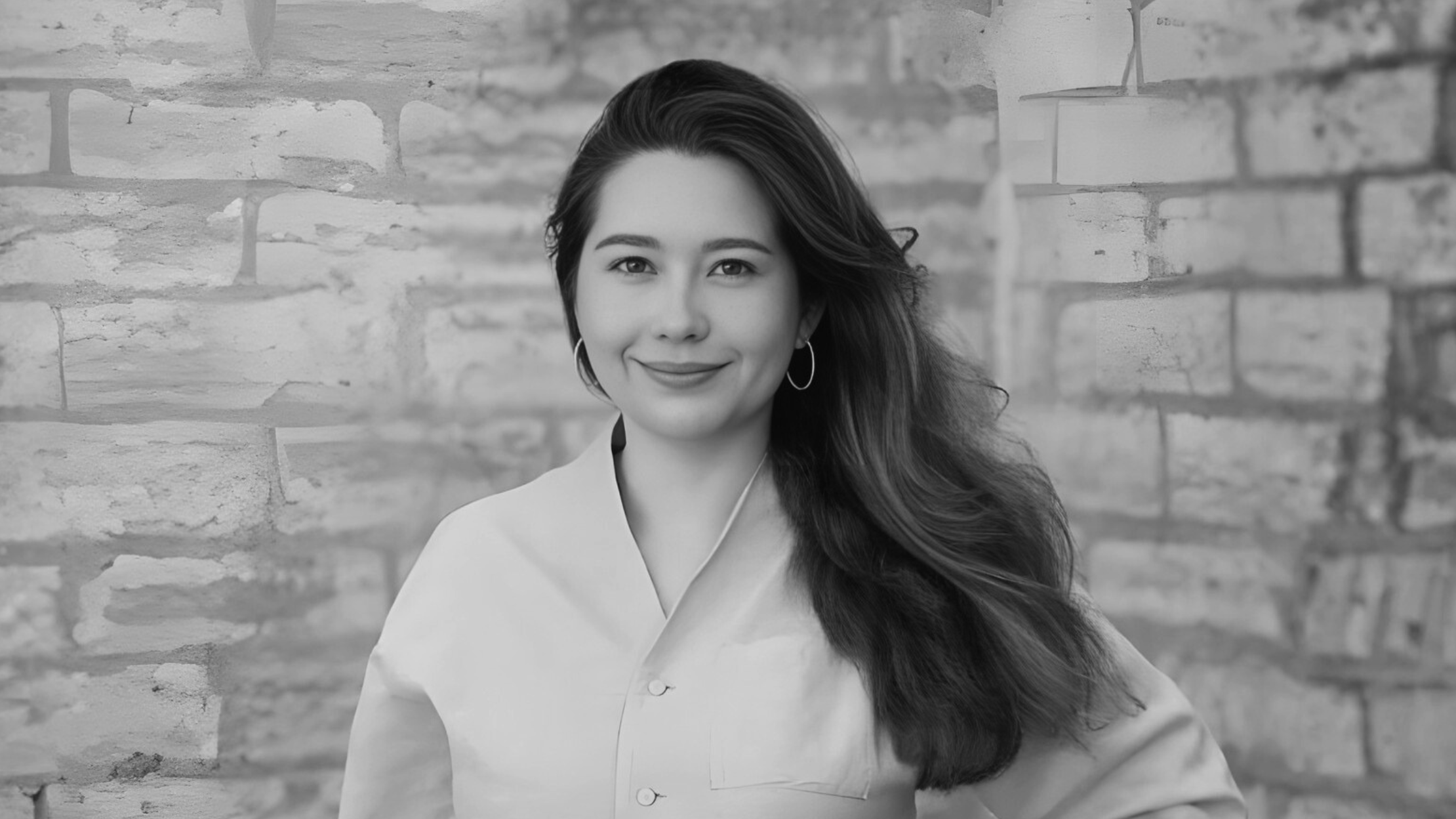
She’s the scientist redefining beauty with artificial intelligence. Anastasia Georgievskaya is the CEO and co-founder of Haut.AI, the Estonia-based startup transforming skincare through AI-powered analysis and generative technology.
Recognized by Forbes, L’Oréal, and the World Economic Forum as one of the leading voices in beauty tech, Anastasia blends her background in biophysics and bioengineering with cutting-edge AI innovation to make skincare more scientific, inclusive, and data-driven.
Under her leadership, Haut.AI has built SkinGPT, a first-of-its-kind generative AI that simulates how skincare products affect the skin over time, used today by major global brands like Neutrogena, Bioderma, and Beiersdorf.
Named among Europe’s top AI entrepreneurs, Anastasia is on a mission to bridge science and self-care, proving that the future of beauty is not in filters but in data, ethics, and human insight.
“Your skin is the front page of your wellbeing. We just built the technology to read it.”
- Anastasia Georgievskaya
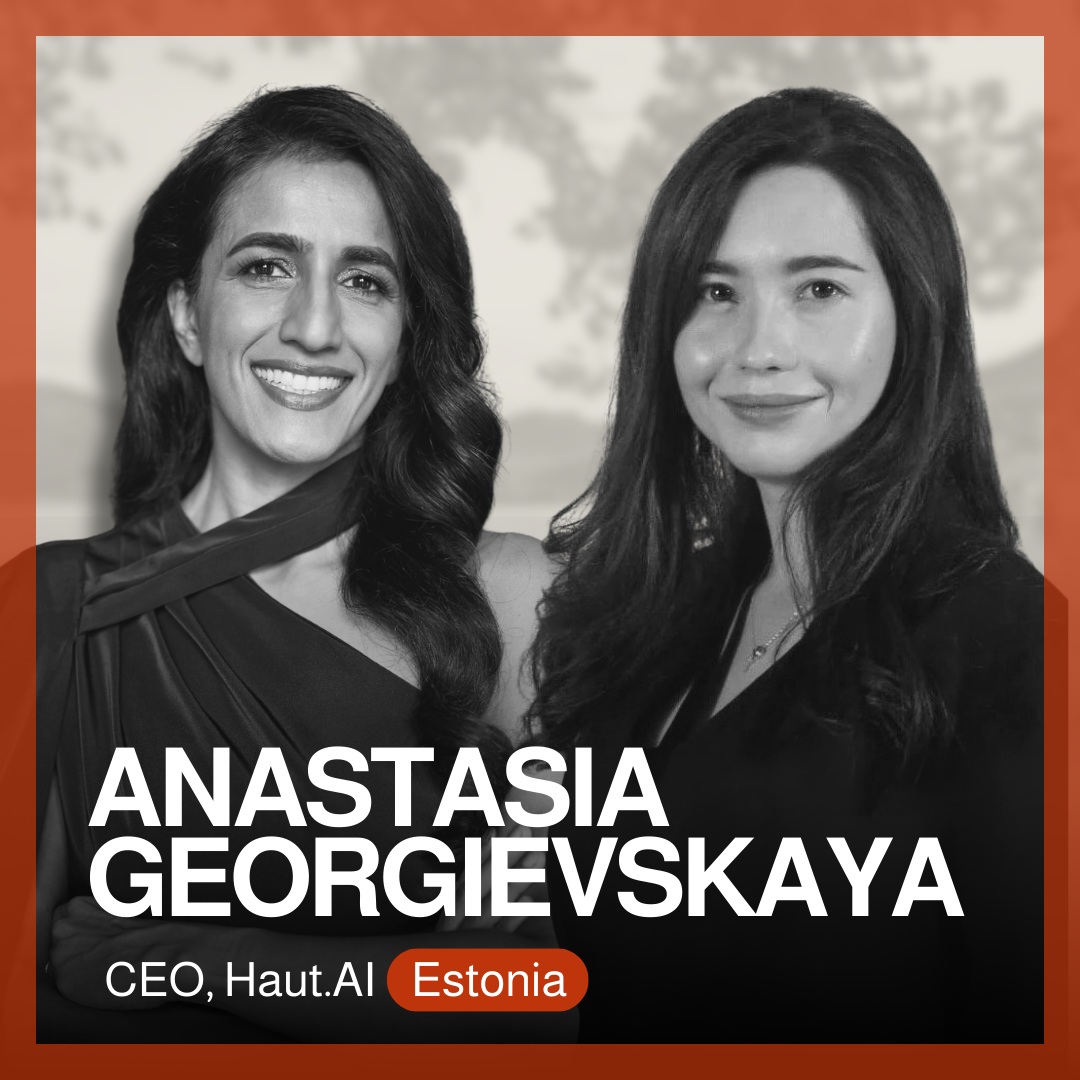
Most of us have an app for everything, our steps, sleep, calories, even stress. But here’s a question: what about your skin? For all the time we spend in front of mirrors, we still rely on guesswork to understand what’s actually happening to the largest organ of our body. That’s the question Anastasia
Georgievskaya, CEO and co-founder of Haut.AI, set out to answer.
From the Lab to the Living Room
Anastasia never planned to be a CEO. “I always wanted to be a scientist,” she laughs. But during her research in biophysics and aging, she realized a strange gap: we track every aspect of our health except the skin. “It’s the first thing people see, and yet we can’t measure it daily.”
That realization sparked Haut.AI, a company born in Tallinn, Estonia, the digital capital of Europe. Using artificial intelligence, Haut.AI analyzes your face from a simple selfie to detect wrinkles, pigmentation, hydration, and even your “perceived age.” It’s not about vanity; studies show that people who look younger than their age often have better cardiovascular and metabolic health.
“I use AI to track my skin every day,” Anastasia says, describing her routine of selfies and high-resolution scans. “It’s like a daily check-up only for your face.”
How a Selfie Becomes Science
Using just your phone’s camera, Haut.AI’s algorithms can detect hydration, wrinkles, pigmentation, and redness, and even estimate your perceived age. The company’s most talked-about innovation is SkinGPT, a generative AI that simulates how skincare products affect the skin over time.
“If a product claims to reduce wrinkles by 15%, that number means nothing until you see it,” says Anastasia. “We translate that claim into a visual simulation — what it would actually look like on your face.”
The technology draws from thousands of clinical studies and millions of data points to build a detailed skin profile. It’s already helping cosmetic brands predict how new formulations might perform before they even reach the shelf. “We’re giving scientists a digital twin of the skin,” Anastasia explains. “They can test, analyze, and optimize treatments virtually.”
Building Fairer Beauty
But AI and beauty haven’t always played well together. Many facial recognition systems have struggled to recognize darker skin tones, creating bias that can carry over into skincare. Anastasia was determined to fix that.
“It’s not enough to have more data,” she says. “We need the right data and the right people labeling it.” Haut.AI uses synthetic datasets created through its own AI models to ensure representation across all ages, ethnicities, and skin tones. “We can generate any skin type from a text prompt,” Anastasia says. “That helps us train systems that see beauty in every shade.”
Even so, she believes AI should never work alone. “There’s always a human in the loop,” she adds. “AI can detect patterns, but humans bring intuition. That’s where innovation happens.”
Inside the Digital Beauty Lab
Behind Haut.AI’s clean interface is a powerful computer vision system that identifies more than 100 skin biomarkers. These range from elasticity and smoothness to signs of sun exposure or inflammation. The company’s tools are used not only by skincare giants but also by dermatologists and researchers studying aging and wellness.
“Your skin tells the story of your health,” Anastasia explains. “When you’re stressed, tired, or unwell, it shows up in subtle ways. We help people track those signals.”
Her team’s long-term goal is to expand beyond the face, creating a ‘skin passport’ that maps the entire body. Using AI, users could one day monitor changes in hydration, collagen, or sun damage across different areas. “It’s like having a digital dermatologist in your pocket,” she says.
Estonia’s Secret Advantage
Estonia may be small, but it’s one of the most digitally advanced nations in the world, a perfect home for an AI company. “Everything here is online,” Anastasia says. “Taxes, healthcare, business registration, there’s zero bureaucracy.”
That efficiency has helped Haut.AI scale quickly while collaborating with researchers and regulators across Europe. The company’s data privacy practices, shaped under strict GDPR laws, anonymize user data and store results locally. “We don’t need your personal information,” she says. “We’re interested in patterns, not people.”
Redefining Beauty Through Data
In a world flooded with filters and impossible standards, Haut.AI takes a different approach. “We’re not here to tell people how to look,” Anastasia insists. “We’re here to help them understand their skin, scientifically, not socially.”
Her view of beauty is data-driven but deeply human. “AI won’t replace dermatologists or creativity,” she says. “It’s a microscope for understanding ourselves.”
Through its blend of computer vision, clinical data, and inclusivity, Haut.AI is doing more than predicting wrinkles, it’s changing how we define beauty and health.
“Your skin,” Anastasia says, “is the front page of your wellbeing. We just built the technology to read it.”
A Love Letter to Humanity
At the end of our conversation, she pauses. “AI gives us something precious—time and emotional energy. We can use it to be kinder, to take care of ourselves and each other.”
It’s a simple, human reminder from someone building the future of beauty:
AI can’t replace empathy-but it can help us look a little deeper beneath the surface.