Reimagining Food Through AI
Our Guest- Adrien Desbaillets
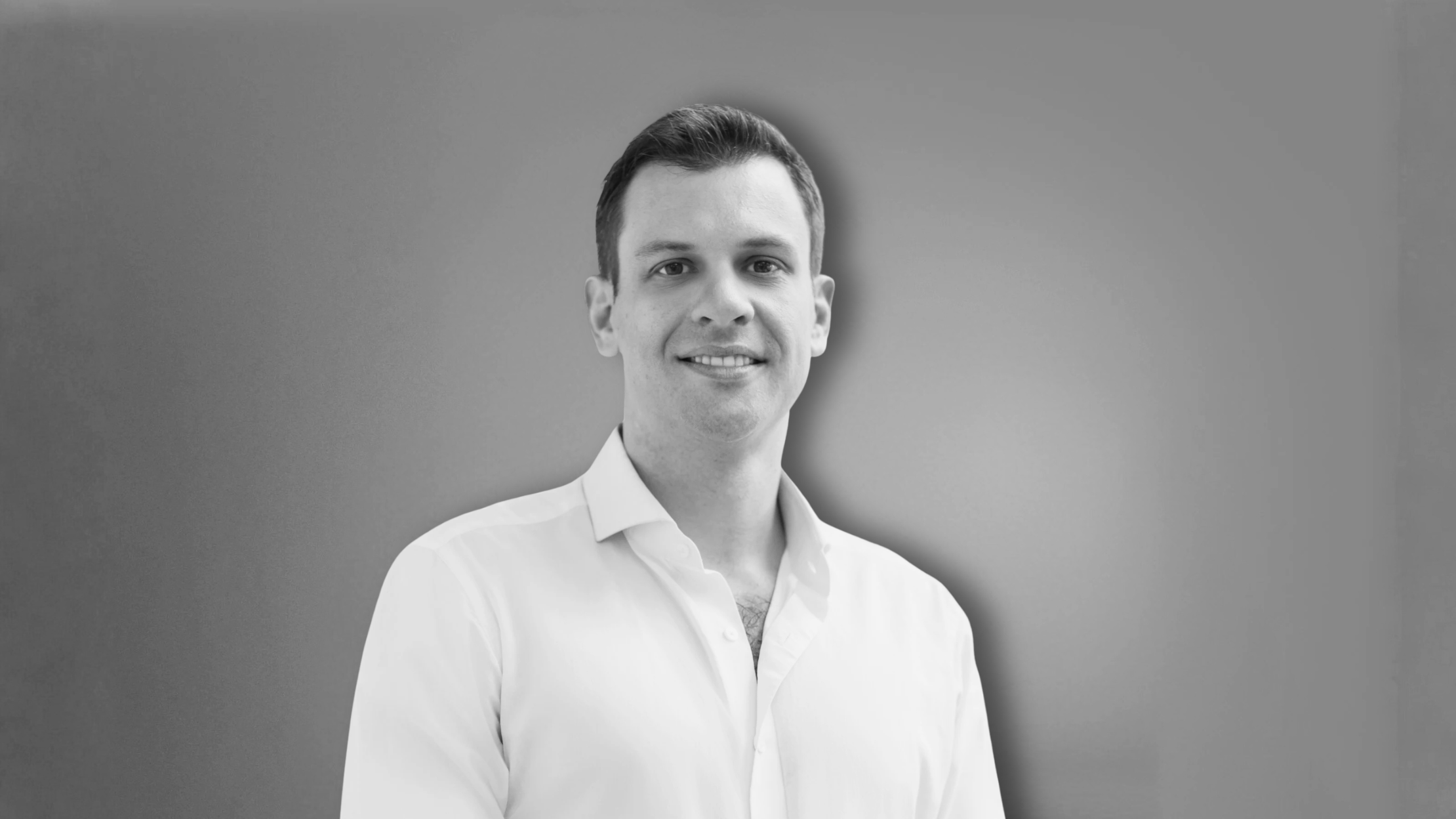
Adrien Desbaillets is the Co-Founder and Chief Executive Officer of SaladStop! Group, the Singapore-born, globally expanding healthy food and beverage company he launched in 2009.
Starting with a single outlet, he has grown the brand into an international lifestyle F&B group with dozens of locations across Asia and Europe, redefining fast casual dining around transparency, nutrition, and sustainability.
Under his leadership, SaladStop! became one of the first quick-service restaurant chains in Asia to achieve B Corp certification, reflecting a deep commitment to environmental and social impact alongside commercial growth. Follow Adrien Desbaillets:
“The biggest opportunity now is connecting with customers differently through AI.”
- Adrien Desbaillets

Episode Transcript
Welcome and Reconnect
Ayesha Khanna: Hi Adrian. Welcome to AI Across Borders.
Adrien Desbaillets: Hi. Actually, good to be here.
Ayesha Khanna: It's so good to reconnect after we worked together briefly so many years ago, and you have always been so passionate about food and health. And here's where I wanna start.
What I Ate Yesterday
Ayesha Khanna: Let's just start with what you ate yesterday.
Adrien Desbaillets: What did I eat yesterday? So it was, we just wrapped up the Chinese New Year festivity. So for me it was actually a home-cooked meal.
So Sunday nights are usually with the kids. If they wanna get involved, I’m in the kitchen with them, and it’s just very simple. So last night I roasted vegetables and some fish.
I love Chinese New Year, a lot of good food and I think everybody probably overdoes it during this time. But yeah, it’s just a nice way to wrap up the festivities.
With the kids, it’s just a time to slow down a little and enjoy the simple things.
Ayesha Khanna: Simple things. That’s always been your thing. Simple, but looks beautiful, colorful, and healthy.
SaladStop Origin Story
Ayesha Khanna: So let’s go to Salad Stop. You’ve been working on it for 15 years, over 15 years. Tell me about Salad Stop and its mission.
Adrien Desbaillets: So when we first started 15 years ago, which you remember, at that point it was just about offering a healthier option. I think people didn’t have access to very much healthy food.
Singapore was changing quite a bit. We saw a new generation of customers, especially Singaporeans, looking for something else than the hawker center and a different format as well.
There was a new generation of QSR emerging out of the US, and we saw that trend come.
The early days were just focusing on flavor and changing mindsets that healthy food is not boring.
Our tagline used to be fresh, fun, fabulous.
Over time, as we grew, we knew we wanted to build a scalable model. It was about systems and looking outside Singapore.
As we expanded, customers started asking more questions—about traceability, what’s in the product, whether it’s made from scratch.
We evolved with the customer.
Ayesha Khanna: I still have it quite regularly.
Scaling Across Asia
Ayesha Khanna: How many countries are you in now?
Adrien Desbaillets: We’re in six countries now. The largest market is the Philippines.
We’re up to 35 stores in Manila and expanding outward.
We do about half a million meals a month.
Ayesha Khanna: That’s incredible.
Healthy Eating Mistakes
Ayesha Khanna: What’s the biggest mistake people make when trying to eat healthy?
Adrien Desbaillets: Everyone is on that health journey. Some are biohackers with specific needs, but most people are just looking for consistency.
Access can be difficult, especially for busy professionals.
There’s also so much information now. It’s good, but it can feel crowded and hard to make sense of.
In Singapore, people are quite aware, but filtering through the noise is difficult. In other markets like the Philippines, people are just beginning their health journey.
We try to meet customers where they are.
Customer Habits and Macros
Ayesha Khanna: What behaviors are consistent among your customers?
Adrien Desbaillets: Regular customers, especially in Singapore and Hong Kong, have a clear idea of what they want.
In Singapore, up to 68% of bowls are custom-built.
Customers choose based on protein, vegetarian needs, or gluten intolerance.
In other markets, people prefer guidance and choose signature bowls.
Tech Vision and Personalization
Ayesha Khanna: How are you using tech beyond operations?
Adrien Desbaillets: Tech has been part of our strategy for a long time.
We initially built in-house solutions, but now we use more off-the-shelf systems for efficiency.
The biggest opportunity now is connecting with customers differently through AI.
We saw a shift toward personalization—people tracking more data, thinking about health span and longevity.
We built early filtering systems, and then with GenAI realized meals could be fully customized.
We launched Lulu, our AI chatbot.
Backend Data and Trust Moat
Adrien Desbaillets: We rebuilt our backend-tagging ingredients by flavor and nutritional profile.
We trained the model on 10 years of order history.
That allows us to understand combinations-if you like croutons, we recommend Parmesan and egg.
This knowledge base and trust make it hard to compete against.
GLP-1 and Industry Shift
Ayesha Khanna: What about Ozempic and similar drugs?
Adrien Desbaillets: People will still eat—but they’ll look for nutrient-dense food.
Smaller portions, higher protein and fiber.
The opportunity is in partnerships with trainers and medical professionals.
Future of the Business
Adrien Desbaillets: It feels like we’re building a new business again.
We’re learning, experimenting, and building new tools.
AI allows us to augment what we’ve already built.
AI and Work
Adrien Desbaillets: AI helps reduce pressure on teams and improves workflows.
But workforce dynamics will change-companies may not need to hire as many people.
That could be a major societal shift.
Closing
Ayesha Khanna: It’s been wonderful reconnecting and discussing the future of food and AI.
Adrien Desbaillets: Thanks for having me.
Ayesha Khanna: Thank you for joining me.