AI That Spots Cancer Before You Feel It
Our Guest- Prashant Warier
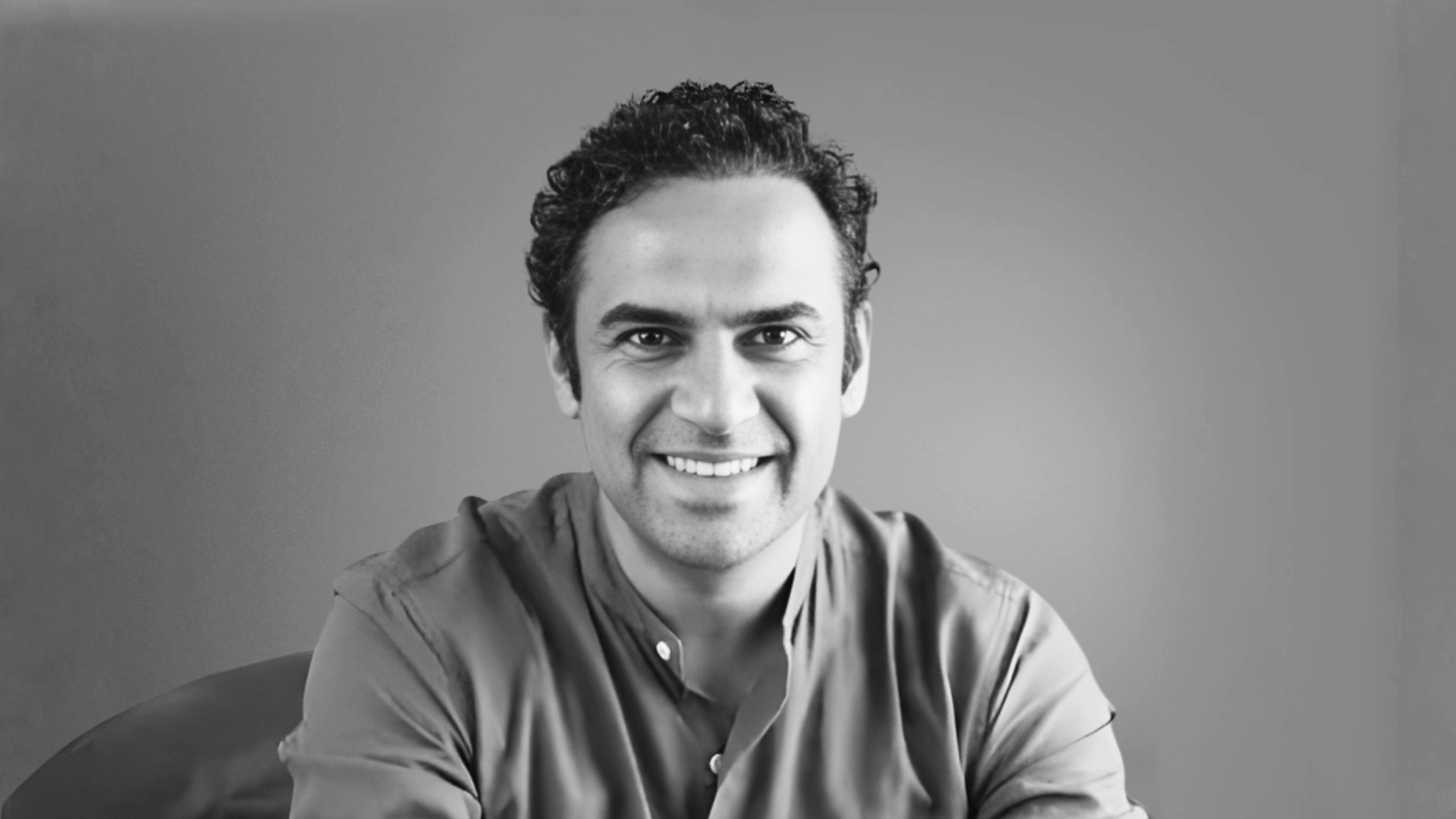
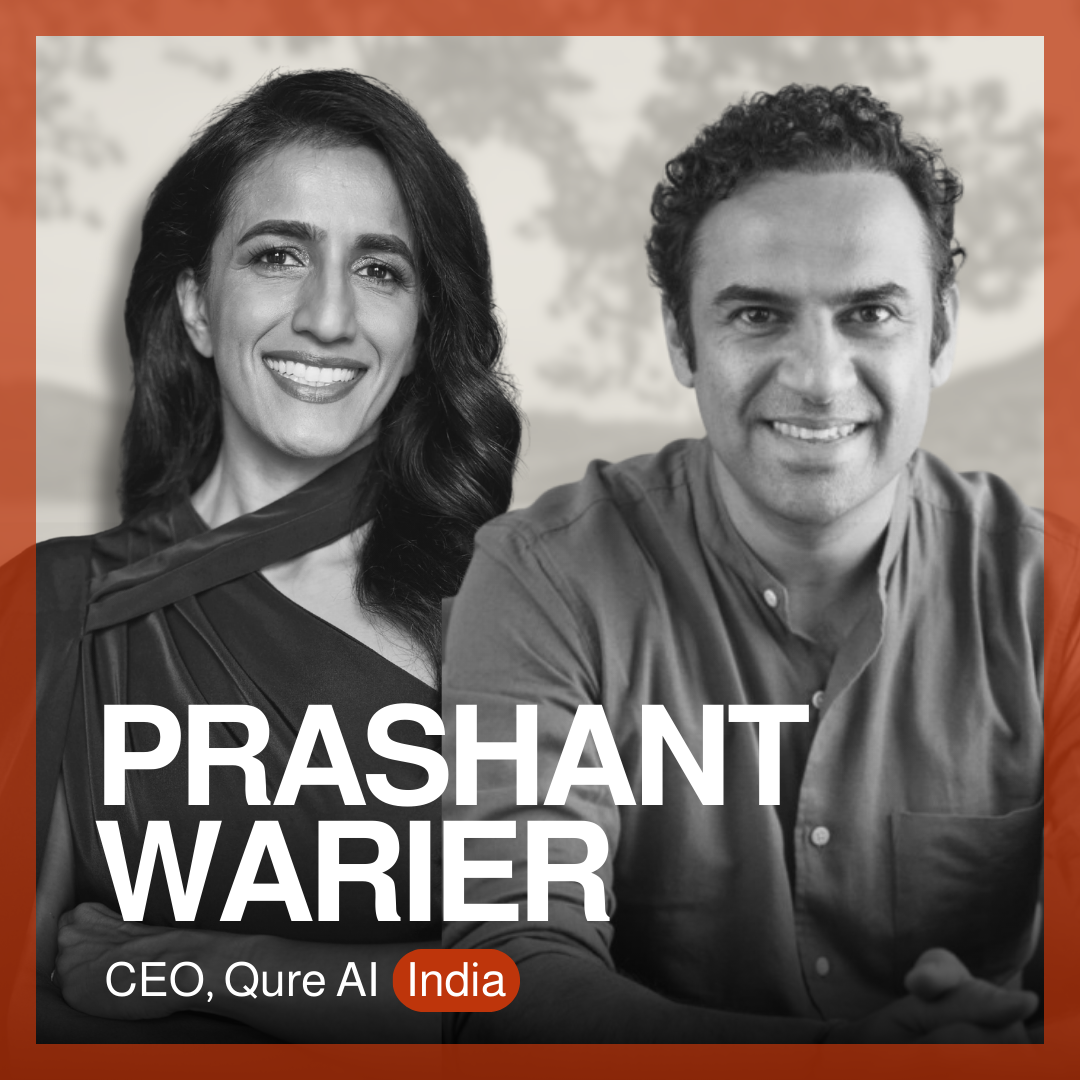
Prashant Warier is the Co-founder and CEO of Qure.ai, a global healthtech company leveraging artificial intelligence to improve medical imaging and enable early detection of diseases like lung cancer and tuberculosis.
An IIT Delhi graduate with a PhD from Georgia Tech, he has spent over a decade building advanced data science solutions and is passionate about making healthcare more accessible, accurate, and affordable through AI innovation.
“AI is not superhuman, but it’s comprehensive. And that’s why it can outperform humans in many tasks.”
-Prashant Warier
Most of us believe cancer makes noise before it strikes. A cough that lingers. Breath that shortens. Pain that sends you to the doctor.
But lung cancer often does the opposite.
As Prashant Warier puts it bluntly: “Patients don’t have symptoms till the nodule or the mass in the lung is pretty large.”
By the time many people feel something is wrong, the disease is already advanced.
That silence is deadly, especially for non-smokers, who don’t think lung cancer applies to them at all. And it’s exactly the gap Prashant set out to close.
The Stage Where Cancer Hides
Prashant explains that most lung cancers are found late because early-stage disease doesn’t announce itself.
“It’s typically stage three or stage four by the time they get detected,” he says. And that timing matters more than almost anything else.
The survival difference is stark:
Late-stage lung cancer: five-year survival often below 5%
Early-stage lung cancer: five-year survival can reach 85–90%
So the real question isn’t treatment. It’s detection.
“How do you figure out if somebody has early lung cancer?” Prashant asks.
Traditional screening relies on CT scans but only for a narrow slice of the population, usually older smokers. That leaves out millions of people who don’t fit the textbook profile.
The Most Overlooked Test in the World
Instead of asking people to do more tests, Prashant and his team at Qure.ai asked a simpler question: What are people already doing?
The answer was hiding in plain sight.
“There are about 1.3 billion chest X-rays taken around the world,” Prashant says. Most are routine, annual checkups, pre-surgery scans, mild complaints. They’re looked at once, then forgotten.
Qure’s idea was to let AI quietly look at every single one.
“Why can’t we look at routine chest X-rays,” he explains, “and detect a nodule that could be lung cancer and then send that patient for a follow-up CT?”
That single step changes everything. Early-stage cancers don’t need dramatic symptoms, they just need someone (or something) paying attention.
Real Lives, Not Hypotheticals
This isn’t theoretical.
Prashant shared the story of a woman in Scotland who went in for surgery prep. A routine chest X-ray. No symptoms. No suspicion.
The AI flagged a risky nodule. A CT followed. Early lung cancer detected.
Another patient in Chennai had the same experience. “He went in for a routine chest X-ray,” Prashant says. “Qure flagged it, the radiologist followed up, surgery was done and he got cured.”
These are moments where timing rewrites outcomes.
“An early stage is much more treatable and preventable,” he says simply.
Seeing What Humans Can’t Or Don’t
AI doesn’t replace doctors, Prashant is clear on that. But it does something humans struggle to do consistently.
“When a radiologist looks at a scan, they’re looking for something specific,” he explains. Fever and cough? Think TB or pneumonia.
“AI is comprehensive,” Prashant says. “It’s looking for everything that’s on that scan.”
That matters because lung nodules can be tiny easy to miss, especially at the end of a long shift. AI doesn’t get tired. It doesn’t assume. It just checks.
“It’s not superhuman,” he adds. “But it’s comprehensive. And that’s why it can outperform humans in many tasks.”
Beyond Cancer: Where the Need Is Greatest
The same approach transformed tuberculosis screening, especially in places with almost no radiologists.
Prashant’s examples are sobering: “Liberia has zero radiologists.” Some countries wait weeks or months for a chest X-ray to be read.
With AI, that changes to seconds.
“We can interpret an X-ray in 20–30 seconds,” he says. “And that turns weeks into hours.”
In the last five years, Qure has helped screen over 25 million people for TB, many in Sub-Saharan Africa, where the need is urgent and the adoption has been rapid.
“If you can get a report in 30 seconds,” Prashant says, “why would you wait weeks?”
The Forgotten Step: Follow-Up
Finding risk isn’t enough.
“You can tell a patient there’s a potentially malignant nodule,” Prashant says, “and they still may not come back.”
Doctors get busy. Patients disappear. Systems drop the thread.
That’s why Qure built tools to manage follow-ups, reminders, tracking, nudges — from first flag to confirmed diagnosis.
Because the most dangerous outcome isn’t a false positive.
It’s silence.
What This Means for All of Us
Prashant doesn’t believe AI will replace doctors anytime soon. “Regulation won’t allow autonomous AI in healthcare for a while,” he says.
But the direction is clear.
“Ideally, every scan should be read by an AI,” he explains; with doctors making the final call, better informed and less burdened.
That shift doesn’t make care colder.
It makes room for something warmer: time, attention, empathy.
And sometimes, it makes the difference between a diagnosis that comes too late and one that comes just in time.