Giving Arabic a Digital Future
Our Guest-Nour Al Hassan
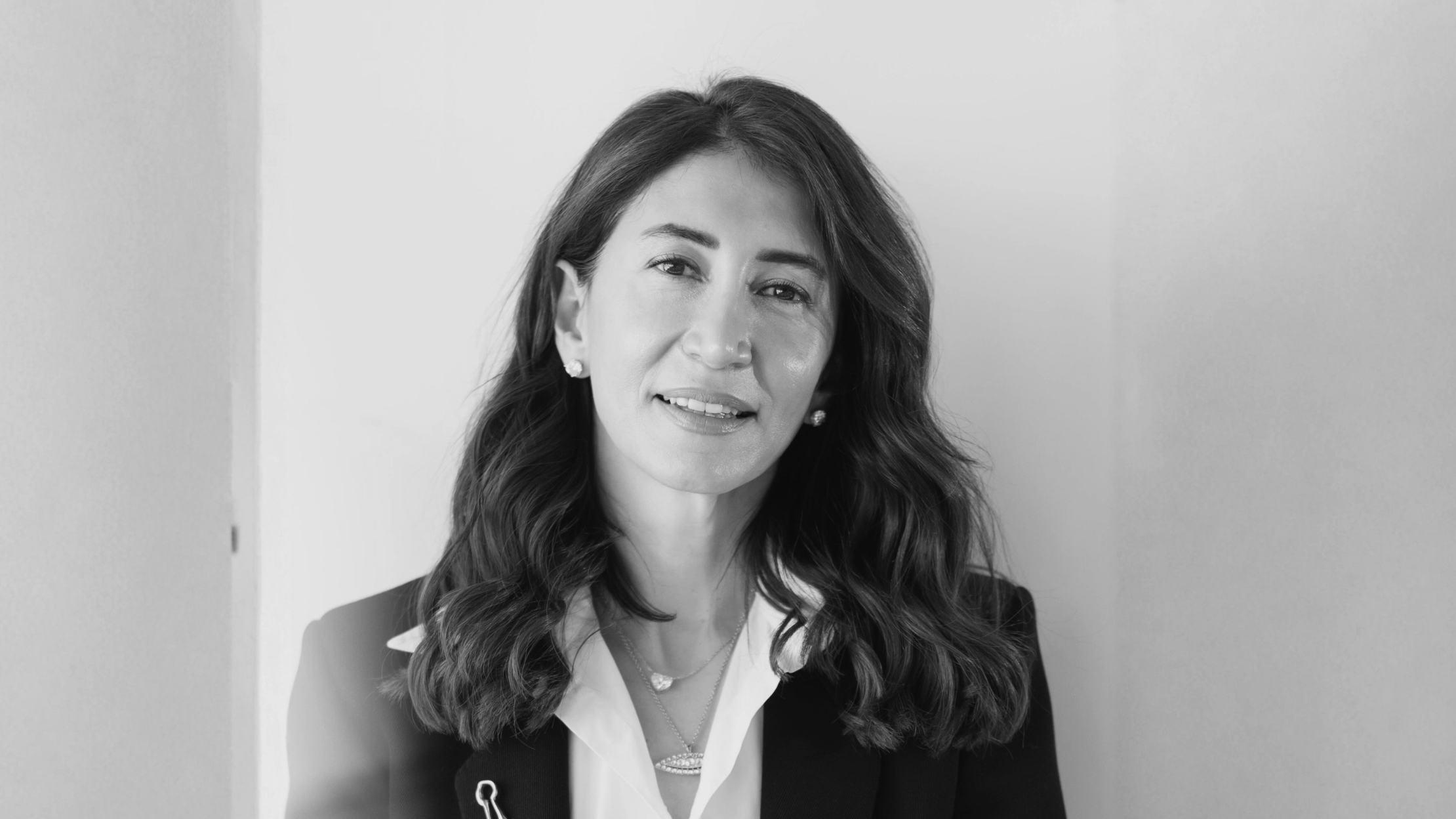
Nour Al Hassan, founder and CEO of Tarjama and Arabic AI, is one of the Middle East’s most trailblazing entrepreneurs, leading the region’s charge into the AI era.
From building one of MENA’s first AI-powered enterprise translation platforms to developing Pronoia, the Arabic-first large language model that topped the Open Arabic LLM Leaderboard, her work is transforming how global institutions use technology in Arabic.
Recognized across the Arab world for her leadership in innovation, women’s empowerment, and AI localization, Nour has turned linguistic and cultural depth into technological strength, proving that Arabic can stand at the forefront of global AI.
“You still need the human in the loop, Technology is easy, people are hard. Adoption takes time.”
- Nour Al Hassan
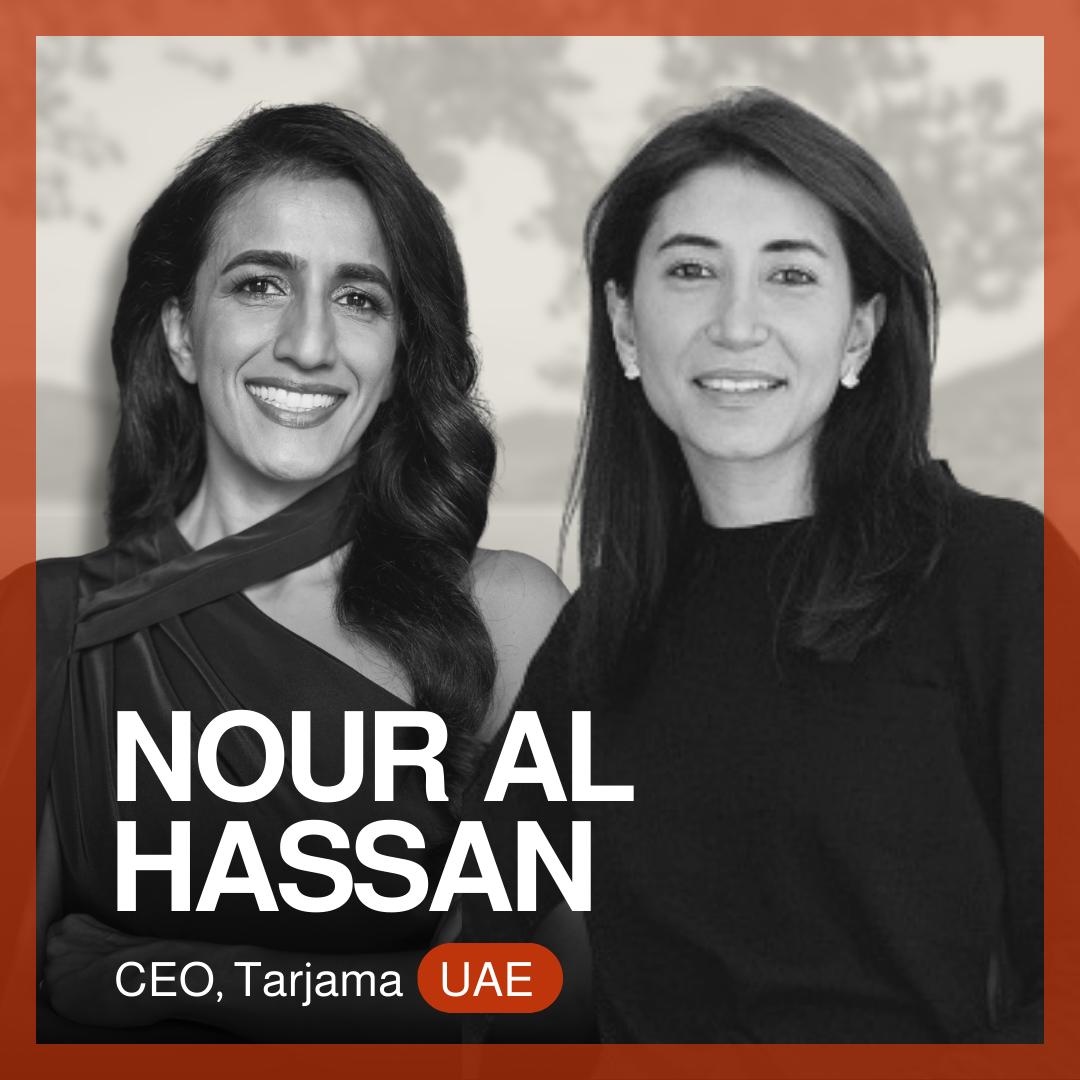
In Amman, Jordan, a young lawyer saw a problem no one else did.
Every time her firm needed Arabic translation, it was a struggle, too slow, too inconsistent, too hard to find good linguists. So Nour Al Hassan decided to fix it herself.
She founded Tarjama, a translation company that would eventually become one of the largest in the region, powered mostly by women working remotely long before “remote work” was a trend. “Women don’t need empowerment,” she says. “They just need opportunity and they shine.”
What started as a small idea to make translation faster and fairer became something far bigger: a mission to make Arabic a first-class language in the digital world.
Giving Arabic Its Digital Voice
Arabic is spoken by over 420 million people, yet it makes up less than 3% of the internet. It’s one of the world’s richest languages, but also one of the hardest for machines to understand, with more than 30 dialects and thousands of subtle cultural cues. “We decided to put Arabic first,” she says. “Not as an afterthought, but as the foundation.”
Her team built Pronoia, an Arabic-first large language model fine-tuned from open-source systems and trained on high-quality, proprietary data. In 2024, it topped the Open Arabic LLM Leaderboard, outperforming global models from OpenAI and Mistral on Arabic comprehension tasks.
“Our secret? Data,” Nour says. “It’s not about copying what Silicon Valley does. It’s about building technology that understands who we are.”
The Enterprise Edge
Arabic AI doesn’t chase consumers, it serves enterprises.
Banks, governments, and large organizations use its models to build secure, AI-powered agents that can automate legal, HR, and customer service workflows, all in Arabic.
These models are smaller, faster, and designed to run on-premise, meaning the data never leaves the client’s system. That’s crucial in sectors where privacy and sovereignty matter. “Not everyone needs a 300-billion-parameter model,” Nour says. “They need something cost-efficient, accurate, and safe and that speaks their language.”
Her approach reflects a growing movement in global AI: small language models (SLMs) that focus on precision, cultural alignment, and security over sheer scale.
Preserving Culture in Code
Arabic AI isn’t just about efficiency, it’s about preservation.
Arabic dialects differ dramatically across the region: a word that’s harmless in Jordan might mean the opposite in Morocco. For global systems trained mostly on Western data, those nuances are easy to miss and the result, Nour warns, is “digital colonialism.”
“When you use tools that only understand English,” she says, “you start thinking and writing like an English speaker. That’s not innovation, that’s imitation.”
To counter that, her team works with cultural ministries and educators to digitize Arabic poetry, literature, and academic content, feeding AI models with authentic regional data. “We’re not just teaching machines to translate,” she says. “We’re teaching them to feel the language - its rhythm, emotion, and soul.”
A New AI Frontier from the Arab World
In 2025, Arabic AI raised $15 million in Series A funding, one of the region’s largest AI rounds. Nour’s vision goes beyond profit: she’s building a regional AI ecosystem that combines innovation with identity.
Her models are already powering businesses across the Middle East, offering the same intelligence as global systems, but designed for local values and regulations. “Every country deserves AI that reflects its language and laws,” she says.
And she’s not stopping there. By the end of the year, one of her models will be open-sourced for public use, a step toward democratizing Arabic AI development across the region.
Humanity in the Loop
Despite her success, Nour remains grounded. She believes AI should amplify human potential, not replace it. “You still need the human in the loop,” she says. “Technology is easy, people are hard. Adoption takes time.”
For her, Arabic AI is more than a company, it’s a cultural mission.
“Arabic isn’t just a language,” she says. “It’s our history, our poetry, our identity. We’re not just building AI. We’re making sure the future speaks Arabic too.”