The Fintech CEO Rewiring Global Payments
Our Guest-Juan Franco
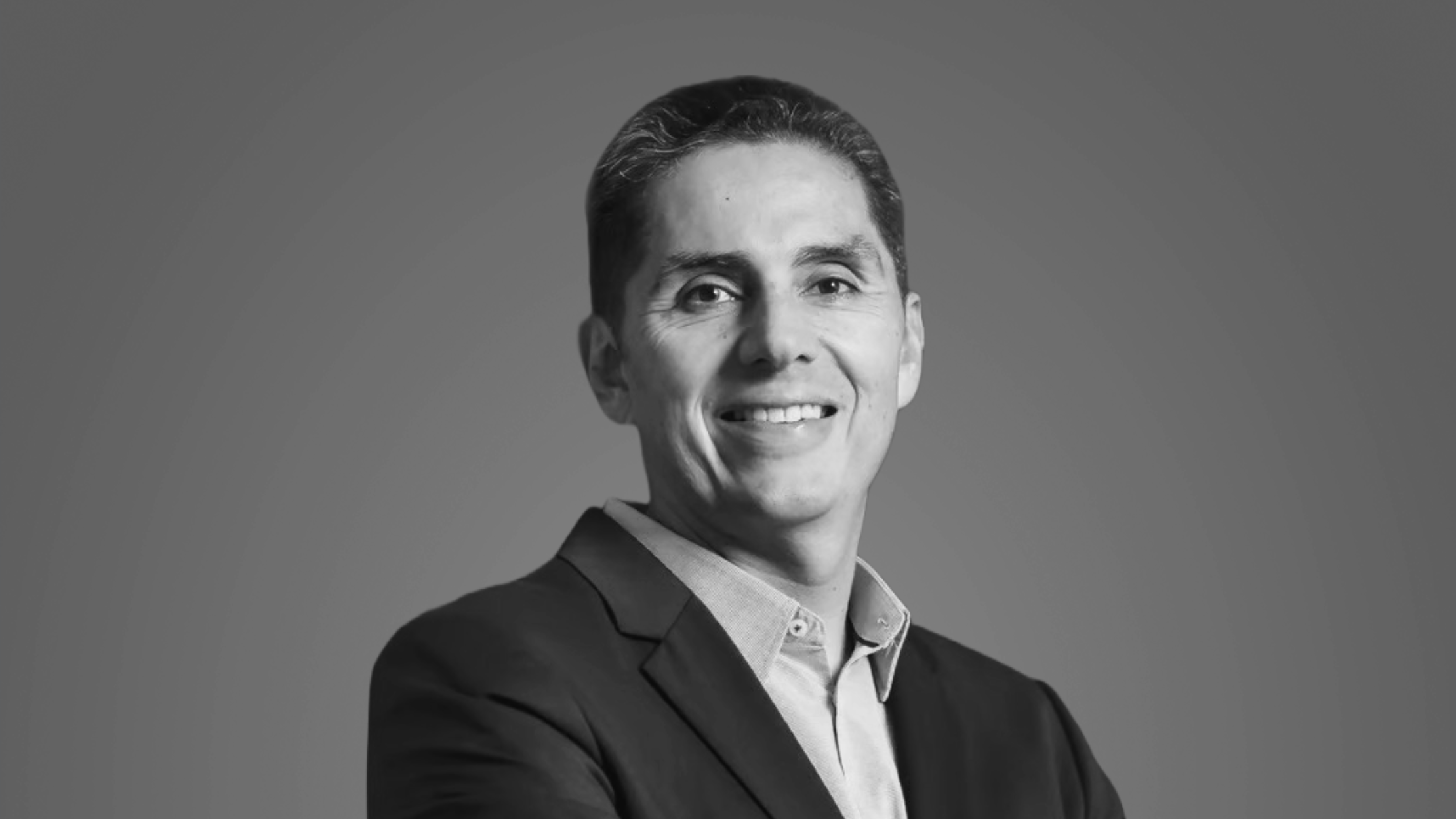
Juan Franco is the Global CEO of Getnet, Santander’s paytech powerhouse processing over €200B+ a year across Europe and Latin America.
Before Getnet, Juan co-founded Paymentez, a pioneering Latin American payments platform acquired by Nuvei, and held senior fintech/tech roles across Latin America, the U.S., and Asia-Pacific, giving him one of the most global perspectives in the industry.
Prior to that, he founded Mentez, the leading social games publisher in Latin America, reaching over 20 million active users in Brazil and establishing market leadership in transactions and monetization.
Today, he leads Getnet’s effort to transform merchant services with AI, smarter fraud detection, better approval rates, and emerging tools like stablecoins and financial agents - building infrastructure for the next era of global commerce.
“Imagine your AI assistant buying your flight tickets and paying for them while you sleep. That’s not science fiction-it’s coming faster than people think.”
- Juan Franco

When Juan Franco talks about money, he doesn’t sound like a banker. He sounds like a traveler.
“I’ve lived in Colombia, Venezuela, Brazil, Singapore, and now Spain,” he says. “I’ve been an immigrant all my life and every time, I’ve had to prove myself twice.”
That mix of grit and global perspective now drives him as the Global CEO of Getnet, a fintech powerhouse processing over €200 billion every year. His mission: to make digital payments faster, smarter, and fairer for everyone from street-side cafés in Bogotá to luxury brands in Madrid.
But his journey began far from any boardroom. It began in Colombia, driven by a belief that technology could equal opportunity.
How a Colombian Engineer Took on Global Finance
Juan’s career started in tech, not finance. “My first job was with a high-tech company in Colombia,” he recalls. “That’s where I fell in love with technology’s power to solve real problems.”
After stints in Venezuela and California, he took a bold leap, launching a gaming startup in Brazil, long before “startup culture” was a buzzword in Latin America. “We built it from scratch,” he says. “And when we sold it, I knew I wanted my next venture to have an impact at scale.”
That next venture changed the game. He co-founded a payments company that connected merchants across Latin America through one simple API. Before that, every country required a different integration, time-consuming and expensive.
“Our idea was simple,” he says. “One connection to process payments anywhere in Latin America. Suddenly, small businesses could compete with global giants.”
When the company was acquired by a global firm, Juan packed up for Singapore. “I saw Asia as the mirror of Latin America, fragmented, fast-growing, full of opportunity,” he explains. “The two sides of the world just hadn’t met yet. I wanted to build that bridge.”
Running a Fintech Empire from a Living Room
By the time COVID hit, Juan was living in Singapore with his family. He laughs remembering those days: “We sold our company to a global payments firm over Zoom. We never even met face to face.”
Today, from his new base in Madrid, he leads thousands of employees across Latin America and Europe at Getnet. Yet, he still approaches every project with the scrappiness of a founder.
“Payments isn’t about transactions, it’s about trust,” he says. “Whether it’s a coffee in São Paulo or an e-commerce sale in Seoul, you want it to just work. That invisible magic? That’s what we build.”
AI, Stablecoins, and the Future of Money
Ask Juan what’s shaking up the world of payments, and he doesn’t hesitate. “Three things,” he says. “AI, stablecoins, and scale.”
Let’s start with AI.
“We use AI at three levels,” he explains. “First, to make our teams more efficient. Second, to help customers by reducing fraud and improving approval rates. And third, to build the next frontier: agentic payments.”
Agentic payments?
“Imagine your AI assistant buying your flight tickets and paying for them while you sleep,” he says. “That’s not science fiction-it’s coming faster than people think.”
Then there’s stablecoins, digital currencies pegged to real-world money. “If you send money from Japan to Argentina today, it takes four days,” Juan says. “With stablecoins, it takes four seconds.”
He pauses, smiling. “That’s not just innovation. That’s liberation—for millions of people and small businesses who need access to fast, affordable payments.”
The Family Chatbot That Predicted the Future
The world Juan describes is already closer than most imagine. His own daughter built a travel chatbot using AI. “It would plan trips for expats in Singapore, ask where you want to go, suggest an itinerary, even handle payments,” he says proudly.
“That was my lightbulb moment,” he adds. “If my teenage daughter can build an agent that organizes a trip, imagine what happens when agents start running commerce.”
But he’s quick to point out the risks. “We used to talk about KYC—Know Your Customer,” he says. “Now it’s KYA, Know Your Agent. What happens when the agent buys something you didn’t ask for? Who’s liable? It’s exciting but it’s uncharted territory.”
Building an Equal Future
For all his talk of tech, Juan’s vision for the future is deeply human. “AI can make us more productive,” he says, “but it can also make the world more unequal if we’re not careful.”
That’s why, whether he’s integrating AI-powered fraud detection or building bridges between Asian merchants and Latin American markets, he’s thinking about inclusion first. “Technology should connect people, not divide them,” he says. “That’s what drives me.”
And maybe that’s why Juan Franco’s story feels so global yet so personal. It’s not about circuits and servers, it’s about people, trust, and opportunity.
“AI, crypto, agents-all of it will change how we pay,” he says. “But the goal is the same: make life easier, faster, and fairer for everyone.”
The Human Side of the Payment Revolution
Juan’s journey, from Bogotá startups to Madrid boardrooms shows that the future of fintech won’t be built by algorithms alone. It’ll be built by people who remember why we innovate.
Because for Juan Franco, money isn’t just power, it’s possibility.